The Caffeine Paradox: Does Caffeine Give You Energy?
Does caffeine give you energy? Not in the way it feels. Caffeine adds zero fuel to your body. It works by blocking the brain signal that tells you that you are tired, so what you feel as a lift is really borrowed alertness. That single distinction is the heart of what we call the caffeine paradox, and once you see it you cannot unsee it.
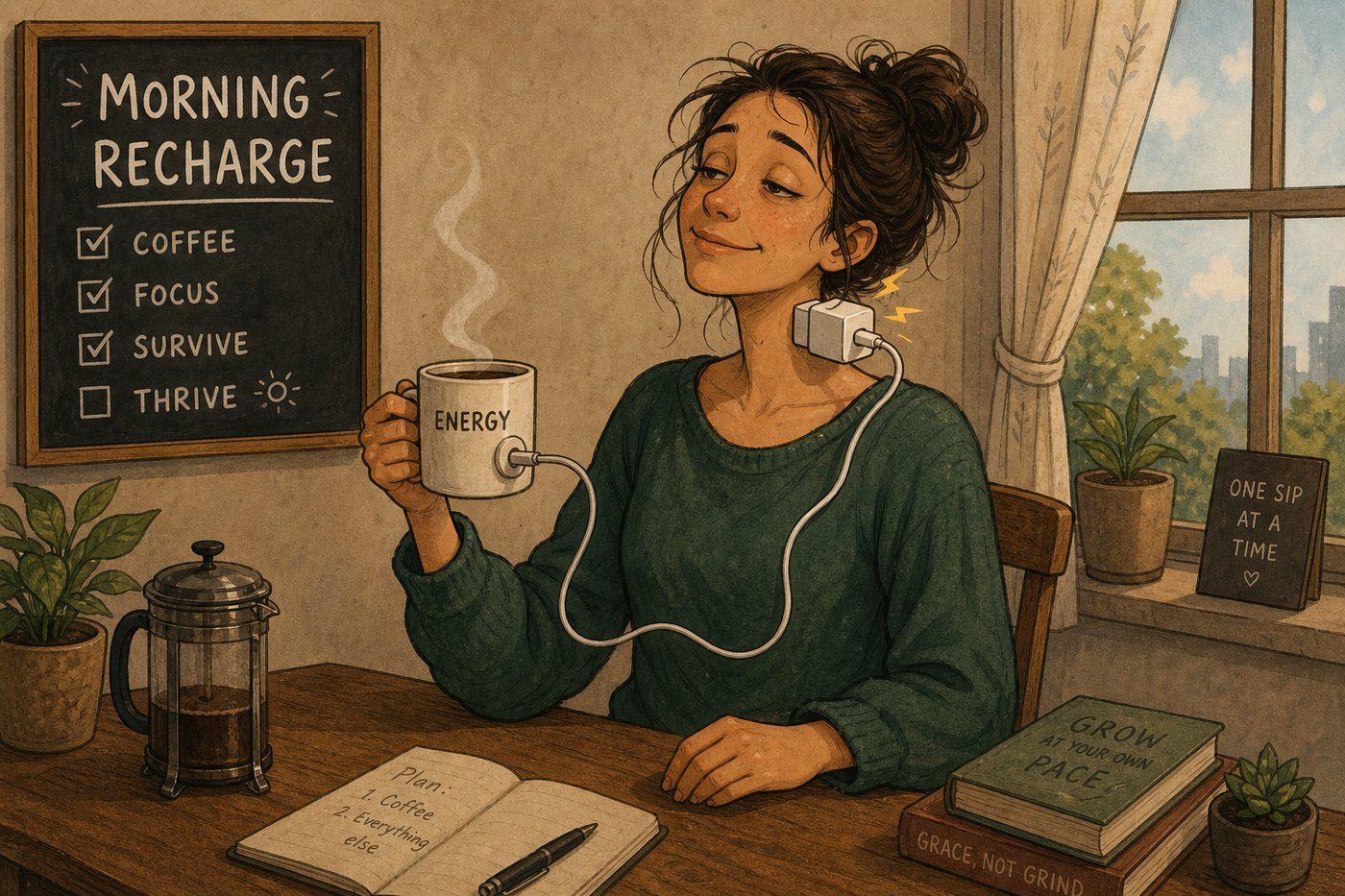
You drink coffee for energy. Every morning that first cup delivers the lift, the focus, the moment your brain finally boots up. So why do scientists keep saying caffeine does not actually give you energy?
Because it doesn’t.
Not a single calorie of fuel enters your body from a black cup of coffee.
Yet the effects feel completely real.
Keep reading and we will walk through exactly what is happening, from the molecule that runs your day to the decaf study that fooled everyone, plus a few honest ways to make your coffee work better for you.
Watch: The Caffeine Paradox
Prefer to watch instead of read? We turned this whole story into a short video, from adenosine and the afternoon crash to the decaf experiment and the honest verdict.

Want more coffee videos like this one, Subscribe HERE.
Does Caffeine Give You Energy? The Short Answer
Here is the deal in one breath.
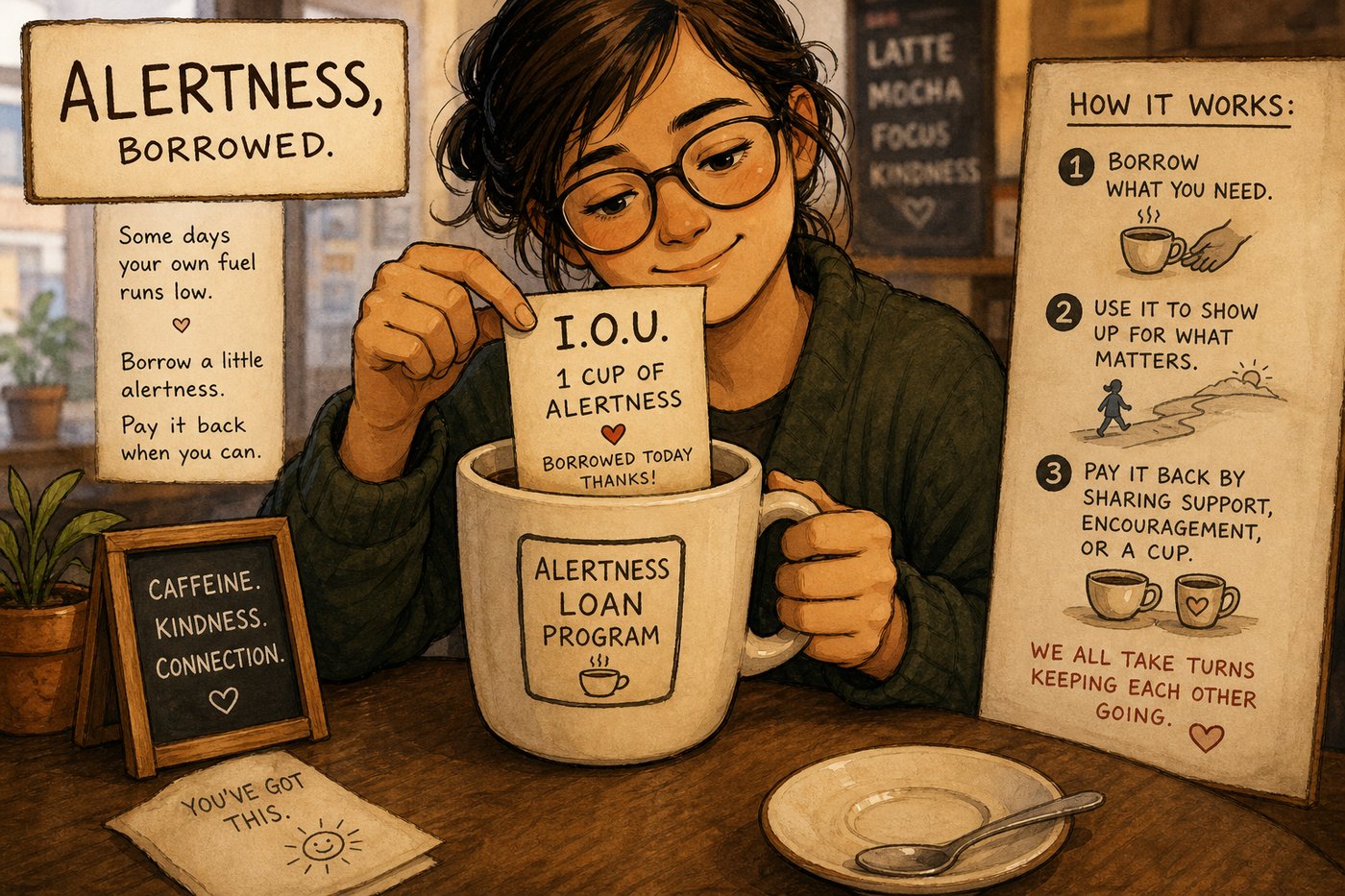
Caffeine is a stimulant, but it is not a battery charger. It does not pour fuel into your tank. Instead it quietly silences the chemical alarm that would otherwise tell you to slow down and rest.
So the honest answer is this:
Caffeine gives you the absence of tiredness, not a surplus of energy.
The tiredness is still there. You just stop hearing it for a while.
This is borrowed alertness.
And, like anything borrowed, it eventually has to be paid back. The rest of this article is the story of who you are borrowing from, and what happens when the bill comes due.
Meet Adenosine, the Molecule That Runs Your Day
Let’s start with tiredness itself, because your brain creates it on purpose.
All day long, as your neurons fire, they produce a molecule called adenosine.
Think of it as a sleepiness signal that slowly builds the longer you’re awake. It attaches to matching receptors in your brain, and when enough of them are occupied you start to feel heavy, foggy, and ready for bed.
This is not a glitch.
It is the system working exactly as designed, with your brain politely saying you have been going long enough, rest now.
So what does caffeine actually do here?
This is where most people picture it wrong.
Caffeine does not charge your battery and it does not add fuel. It just happens to look enough like adenosine to slip into the same receptors.
But once it is there, it does not switch them on. It simply sits in the spot, like a cork jammed in a bottle, so the real adenosine cannot dock.
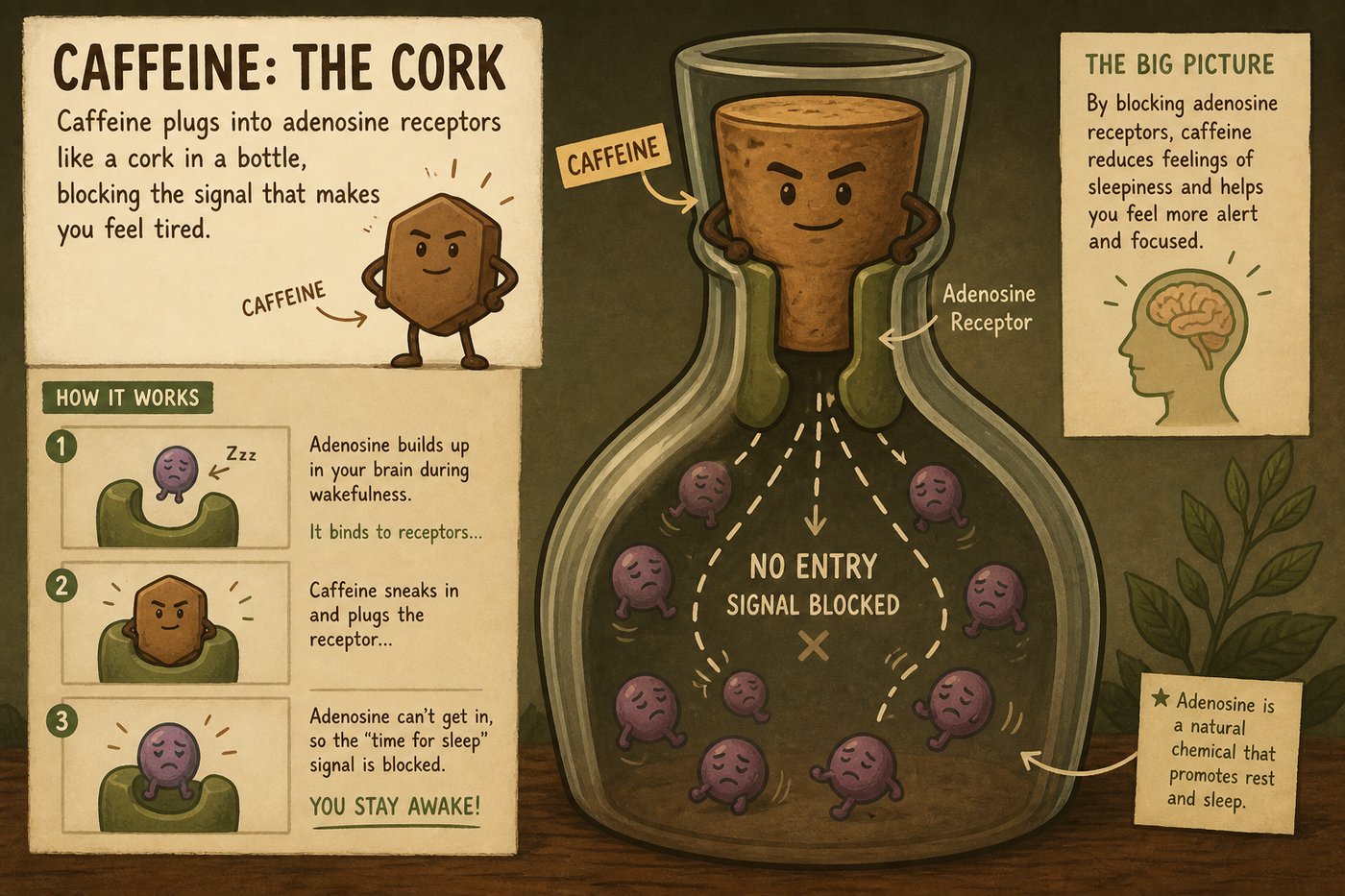
Sleep scientists describe caffeine as an adenosine receptor antagonist, which is a formal way of saying it blocks the tired signal rather than creating an awake one.
The Sleep Foundation puts it plainly:
Caffeine promotes wakefulness by blocking adenosine, the chemical that makes you drowsy.
Pharmacology reviews in the StatPearls medical library go a level deeper, noting that caffeine crosses into the brain and blocks all four adenosine receptor subtypes, with the A2A receptor doing most of the wakefulness work.
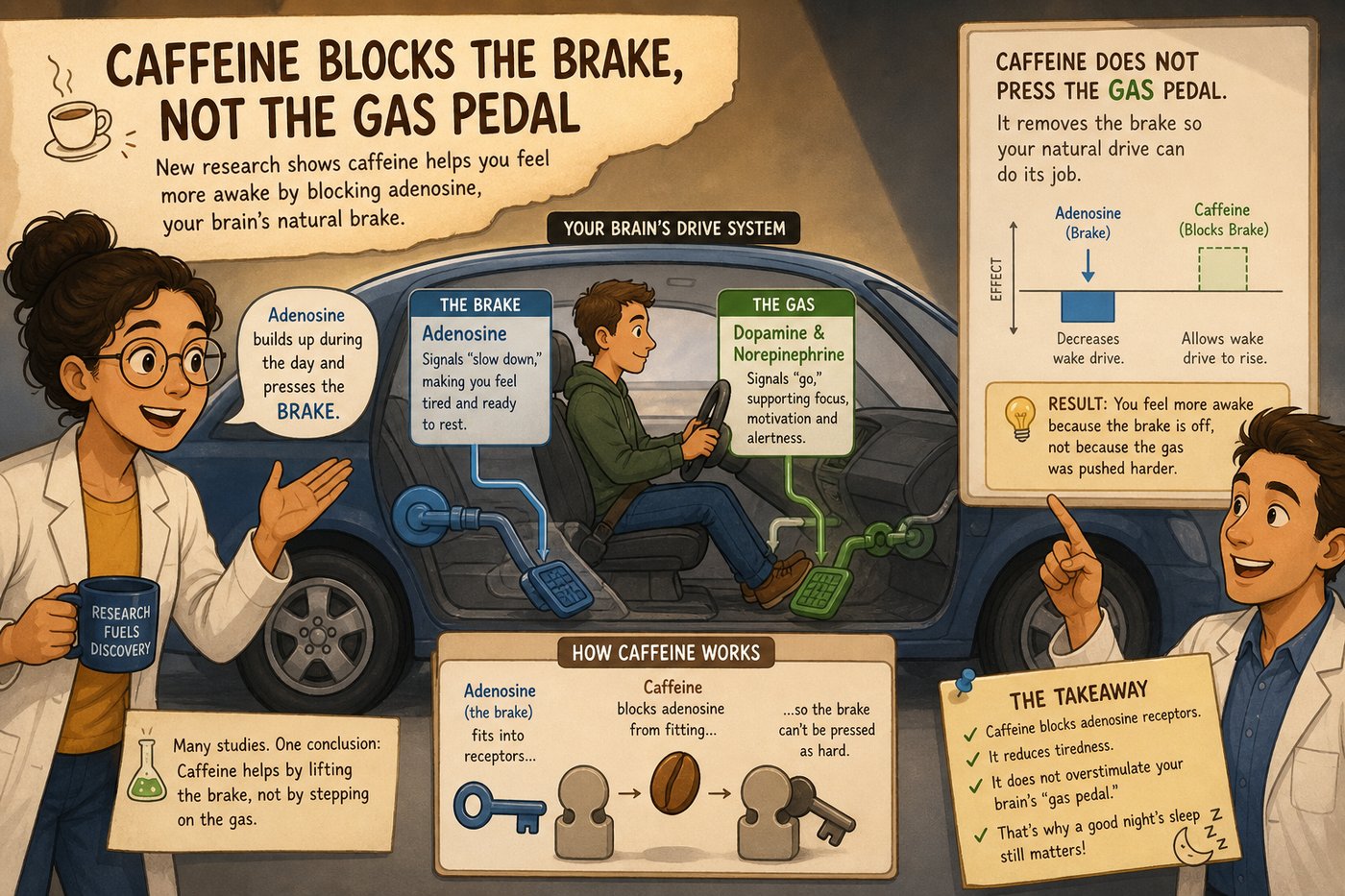
Worth sitting with for a second:
Caffeine blocks the brake, it does not press the gas pedal.
You are not getting new energy. You are getting the removal of a tiredness message that was already building before your first sip.
That one distinction changes how you read everything else about coffee.
The Caffeine Debt and the Afternoon Crash
Here is the catch nobody mentions on the coffee bag.
While caffeine sits on those receptors, your neurons do not stop making adenosine. It keeps piling up in the background, quietly, like a bill you did not realize you were running up. The cork is in the bottle, but the pressure behind it is still rising.
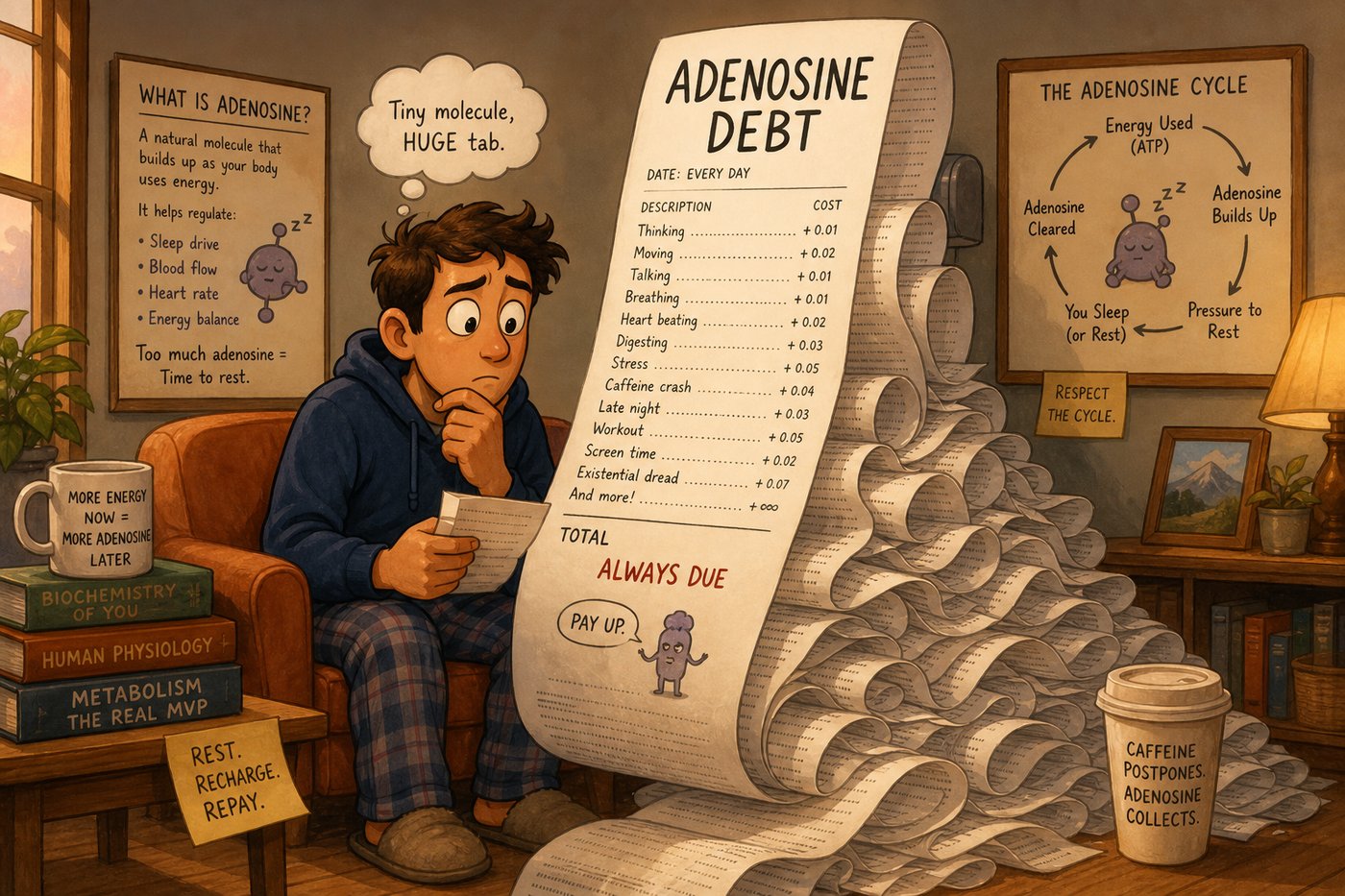
Eventually, the caffeine wears off.
Its half-life is roughly five to six hours on average, though it ranges widely from person to person, anywhere from about two to twelve hours depending on genetics, smoking, pregnancy, and liver function, according to the Sleep Foundation.
When the cork finally pops, all that backed up adenosine rushes the now open receptors at once.
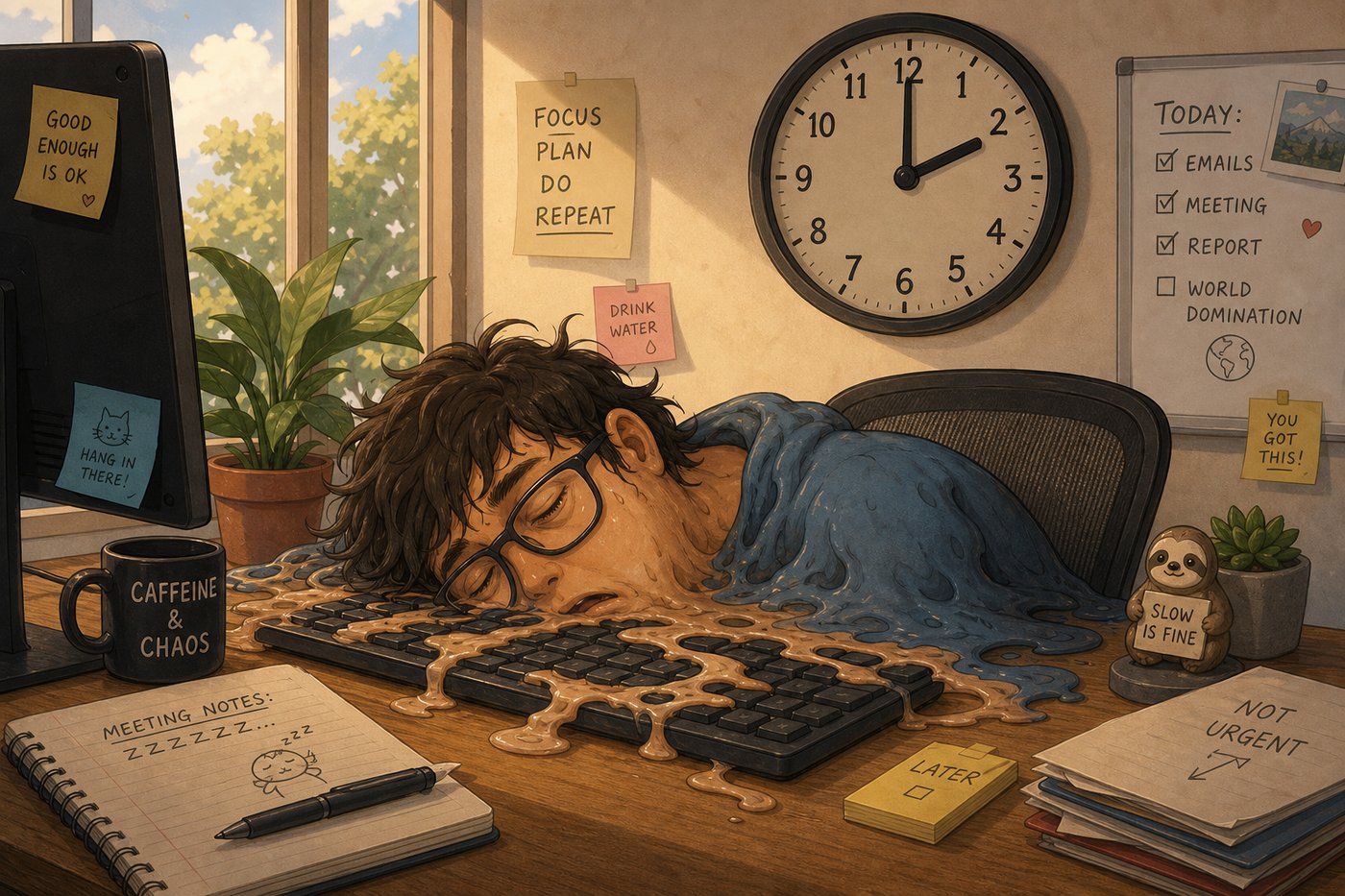
That is the debt coming due.
The afternoon crash.
The two o’clock wall.
It also explains why a second cup rarely lands like the first one. Drink coffee daily and your brain adapts by growing more adenosine receptors over time, which the American Academy of Sleep Medicine and pharmacology reviews link to tolerance. Same dose, less effect, and a harder landing on the other side.
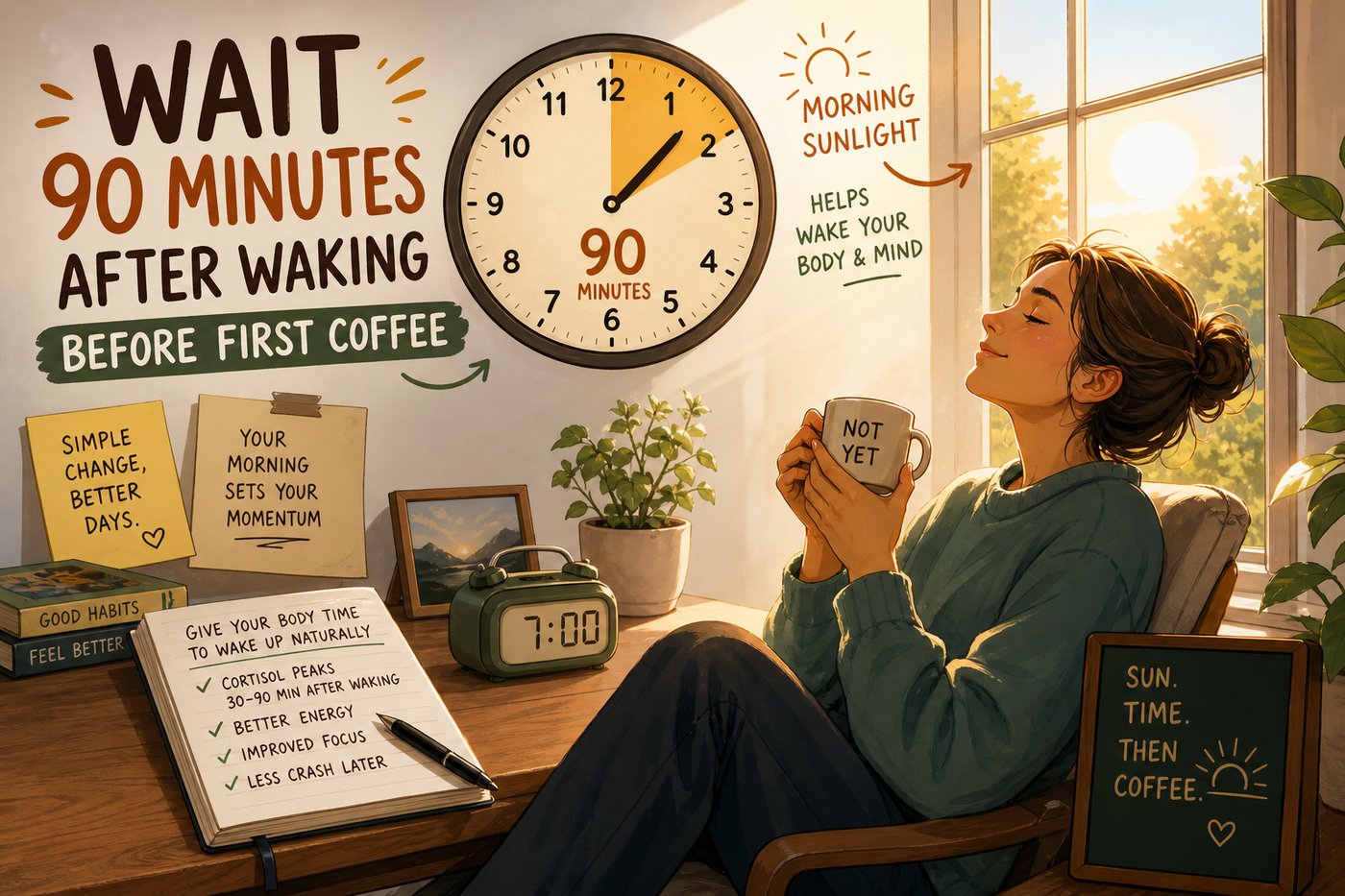
What About the 90-Minute Coffee Rule?
You have probably scrolled past the viral advice you’ve seen on social media:
Wait about ninety minutes after waking before your first coffee.
The logic goes like this.
Right after you wake, your body runs a natural cortisol surge called the cortisol awakening response, a real, well documented spike that peaks roughly 30 to 45 minutes after you open your eyes, as detailed in a 2024 review in Endocrine Reviews.
The idea is that stacking caffeine on top of a cortisol peak is wasteful, so you wait for it to settle, clear a little adenosine naturally.
This lets the caffeine hit cleaner.
This all sounds well and good. And, it might end up having some truth.
But, here is the honest part…
The mechanism is plausible, but the specific ninety minute rule is not currently backed by a proper randomized trial testing.
It was popularized by neuroscientist Andrew Huberman and has since spread through wellness videos, and as Verywell Health reports, most researchers are skeptical and Huberman himself has softened the advice.
If you get an afternoon crash, delaying your first cup is a cheap, harmless experiment worth trying for a few days. Just do not treat it as settled science. You are timing the cork, not rewriting the chemistry.
The Decaf Experiment That Fooled Everyone
Now we get to the part that genuinely breaks people’s brains.
Researchers wanted to answer a deceptively simple question:
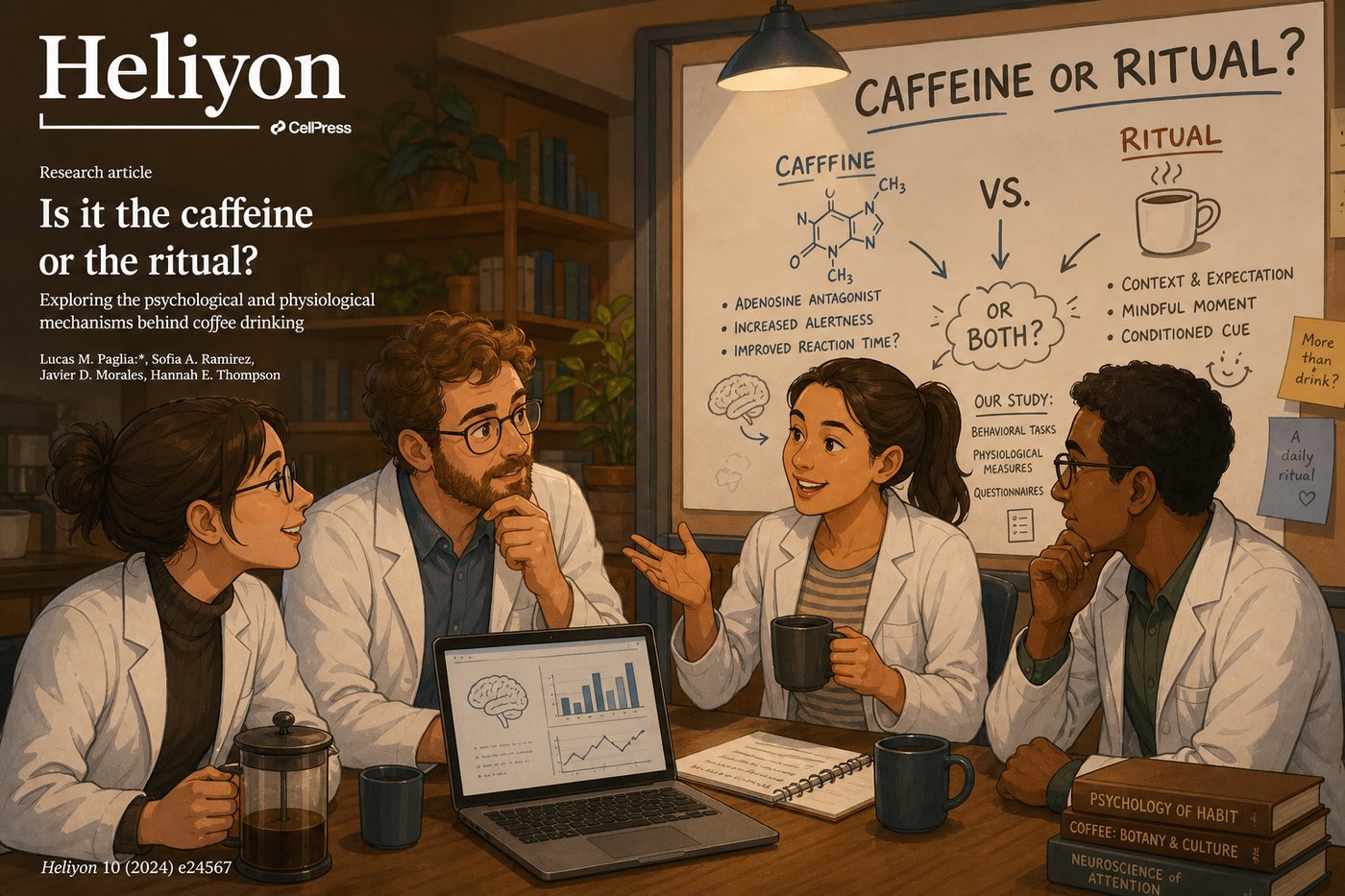
Does coffee wake us up because of the caffeine, or because of the ritual?
The Heliyon Study
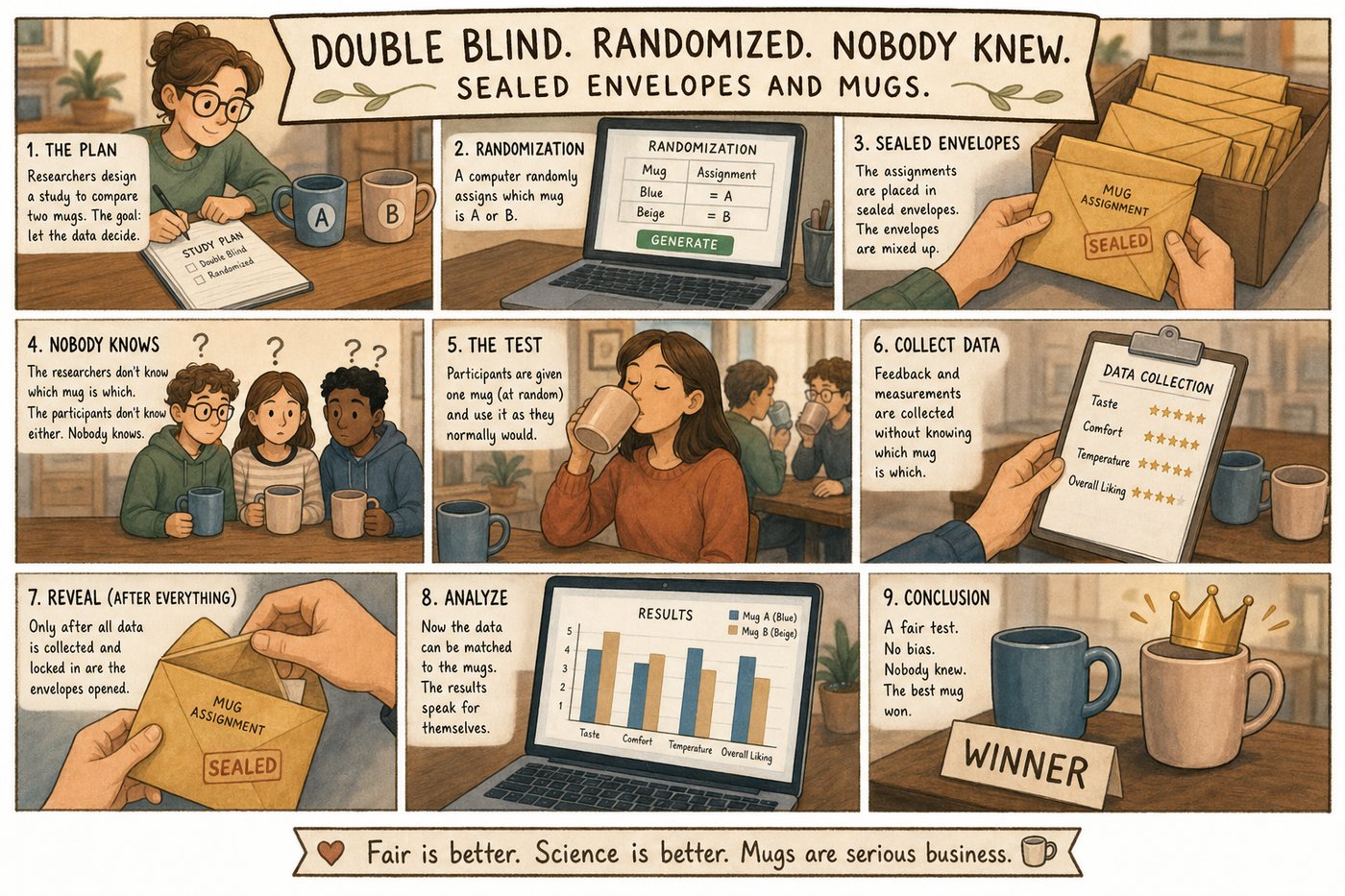
A 2024 study published in the journal Heliyon set out to test it with 20 habitual coffee drinkers who each had one to three cups a day. Everyone went eight hours without caffeine, then drank a cup that looked, smelled, and tasted identical for both groups.
The only difference was hidden: one cup had caffeine added back in, the other was plain decaf.
It was double blind and randomized, so nobody in the room knew who got what. The team tracked heart rate, blood pressure, reaction time, and whole head brain activity with EEG.
The expectation was obvious:
The caffeine group would light up, the decaf group would stay flat.
That is not what happened.
Both groups changed.
Blood pressure rose and heart rate dropped in each of them, the usual response seen in seasoned coffee drinkers. Reaction times improved in both groups too, although here is the fair caveat: that improvement only reached statistical significance in the caffeine group.
Resting Alpha Power
Caffeine did pull ahead on one brain wave measure, resting alpha power. But on most other markers, the decaf cup looked a lot like the real thing, as coverage from ScienceAlert summarized.
Since I didn’t really understand what “resting alpha power” was, I did a little research to learn:
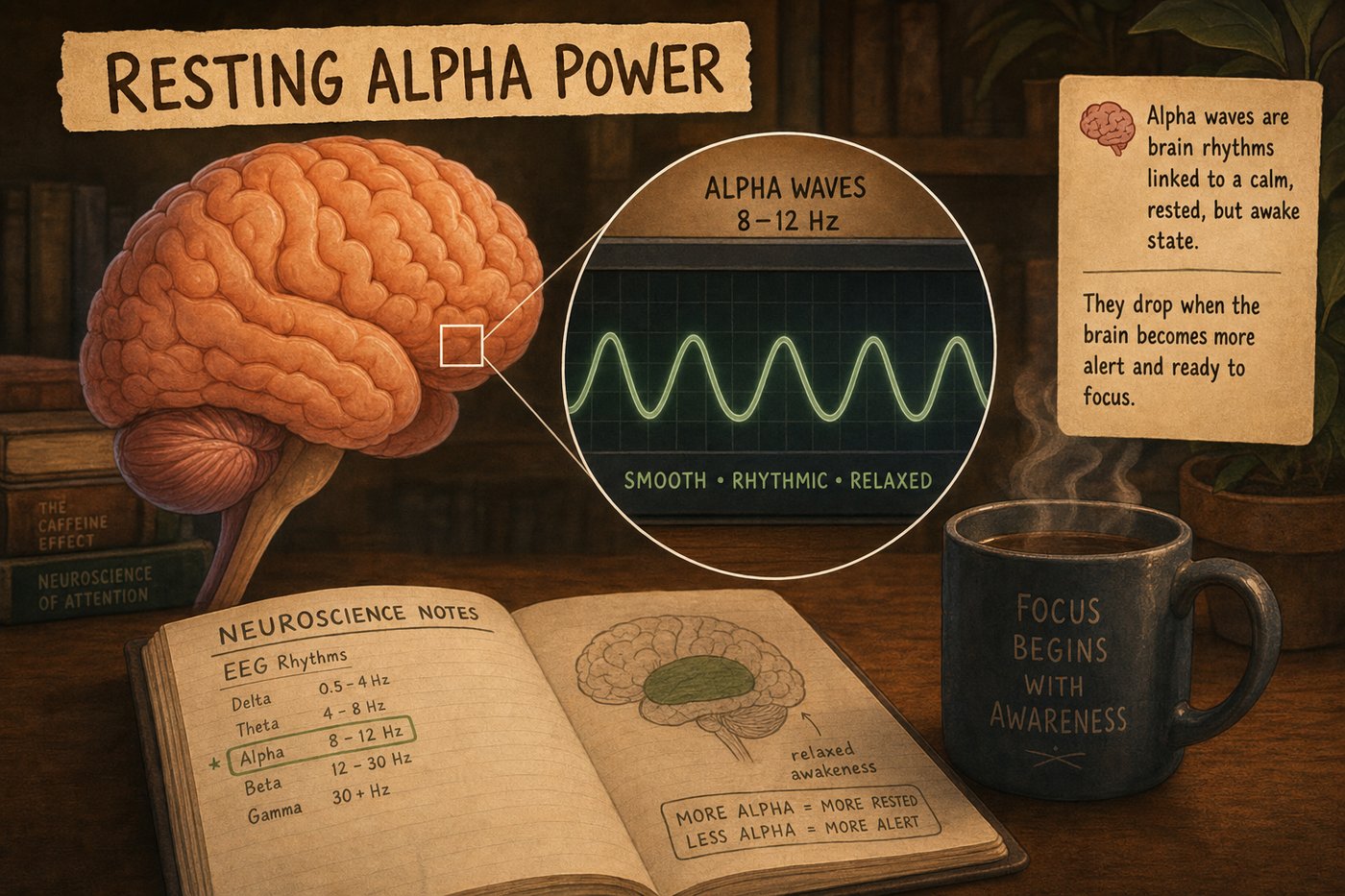
Alpha waves are brain oscillations in the 8–12 Hz frequency range. They’re the dominant rhythm you see when someone is awake, relaxed, and not concentrating hard on anything. This is sort of an idling state for the cortex.
“Power” in EEG terms just means the amplitude or intensity of that specific frequency band. In other words, how strong or prominent those alpha oscillations are in the recorded signal.
“Resting” specifies the condition under which it’s measured. This is not during a task, just baseline brain activity.
Why this matters:
Alpha power is generally treated as an inverse marker of cortical arousal. When alpha power is high, the brain is in a more relaxed, idling state. When alpha power drops, it usually signals increased arousal or alertness. This is the cortex “waking up” and becoming more active.
Caffeine blocks adenosine receptors. Since adenosine signaling is tied to alpha rhythms, caffeine reliably suppresses resting alpha power. Even in situations like this study, participants couldn’t consciously tell the difference between caffeinated and decaf coffee Yet, their subjective reports and behavior look the same either way.
The brain was showing an objective, measurable physiological response to caffeine (reduced alpha power, i.e., more cortical arousal) even when the person’s conscious experience and behavior didn’t reflect it. The subjective effects people attribute to caffeine may be driven more by expectation, taste, ritual, and placebo than by the actual pharmacological arousal. This is even though the pharmacological arousal is real and detectable at the EEG level.
The Placebo Difference
One detail makes it land harder.
The placebo was not sugar water.
It was actual decaf coffee, because habitual drinkers respond to coffee, not just to the molecule inside it.
The researchers concluded that regular coffee consumers react to coffee-like drinks largely independent of whether caffeine is present.

In other words…
Your brain may be responding to the cup itself.
It may be responding to…
The heat.
The smell.
The first sip.
Years of conditioning, firing before the caffeine has even reached your bloodstream.
If you have been decaf curious, this study is quietly reassuring. Maybe decaf is not giving up. Maybe it is letting the ritual do the heavy lifting. If you want to test that idea, our guide to the best tasting decaf coffee is a good place to start.
Your Secret First Cup: Caffeine Withdrawal
So if decaf can partially work, what is your first real cup of the day actually doing?
Possibly something less heroic than it feels.
If you drink coffee every day, your brain comes to expect caffeine.
Take it away and you get a familiar cluster of symptoms: headache, fatigue, irritability, poor concentration, and low mood.
This is caffeine withdrawal, and it is real enough to appear in the DSM-5, the diagnostic manual used by clinicians. The formal criteria, laid out in a widely cited review in the Journal of Caffeine Research, require prolonged daily use followed by cutting back, then three or more symptoms like headache, marked fatigue, or difficulty concentrating.
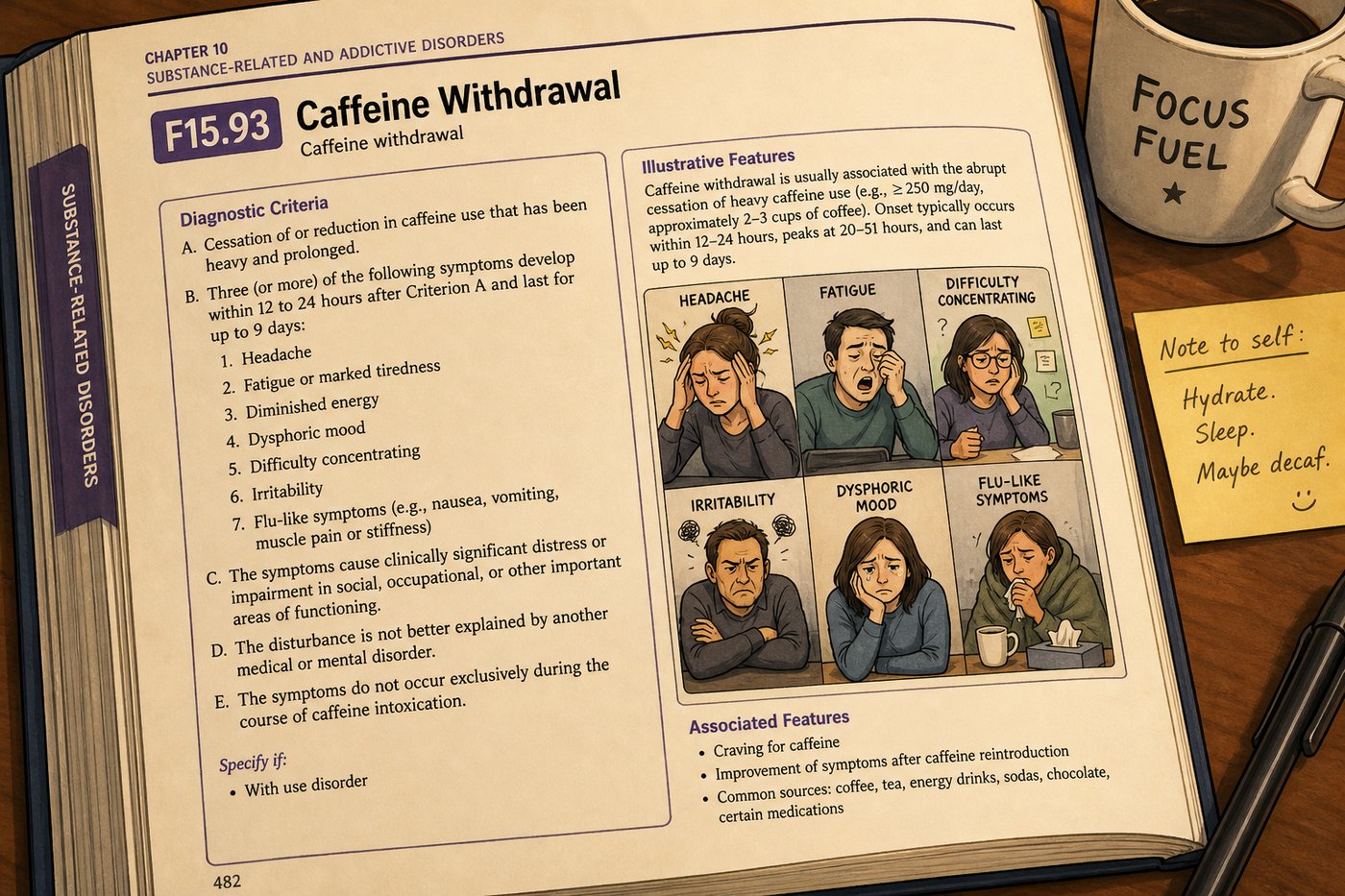
Timing matters here. According to the StatPearls caffeine withdrawal review, symptoms typically start 12 to 24 hours after your last dose, peak somewhere around 20 to 51 hours, and fade within two to nine days for most people.
Now hold that next to your morning.
You sleep for eight, nine, ten hours, which is really just a long fast from caffeine. You wake up already sitting in mild withdrawal.
Then you brew…
The headache eases, the fog lifts, your personality comes back, and it feels exactly like energy arriving.
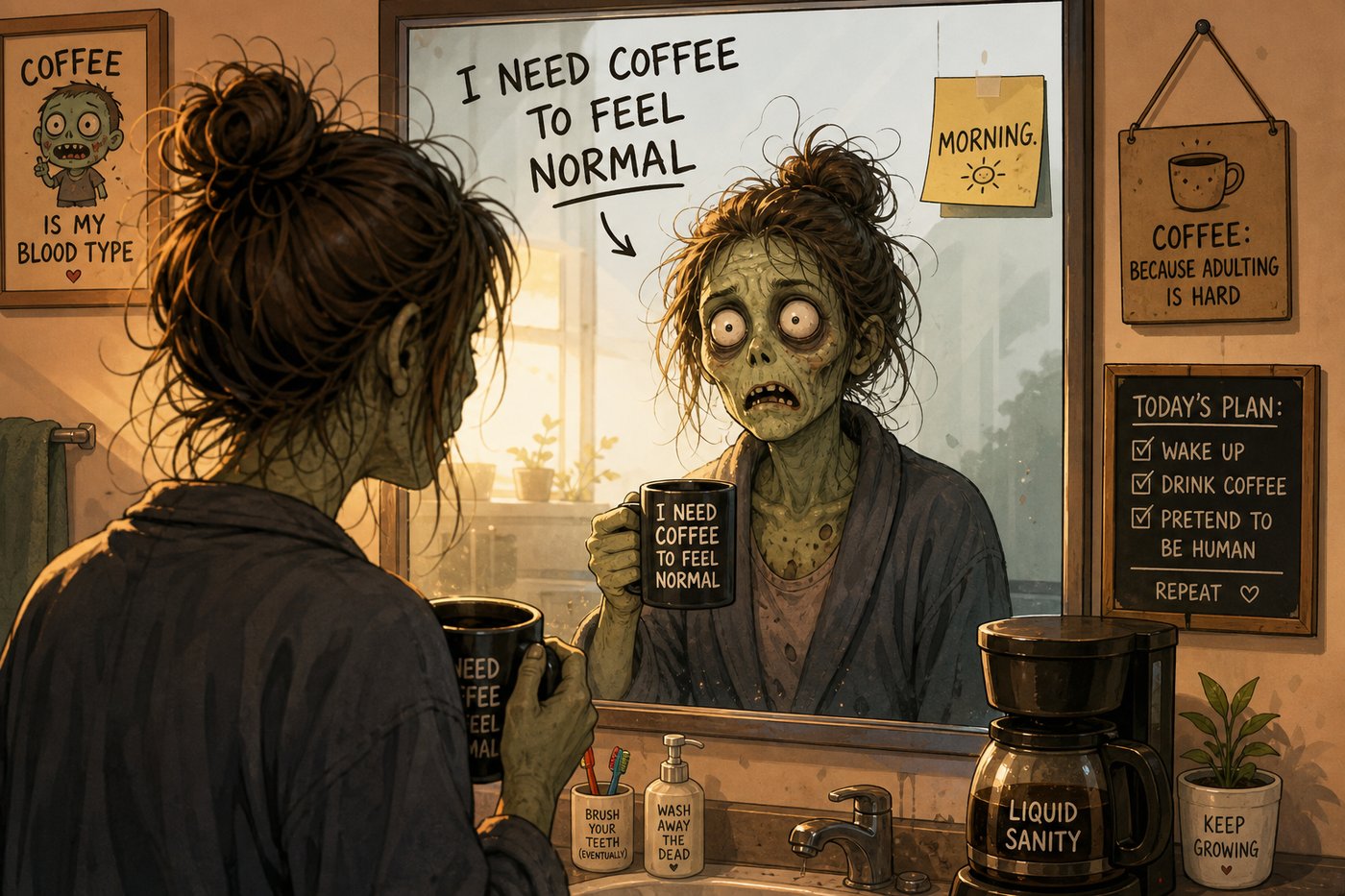
But part of what you are feeling may be relief, relief from the gap, rather than fuel from the bean.
That is not an insult to coffee.
It is the paradox in action.
The drink that powers your morning might also be the drink your morning now needs just to feel normal.
Anyone who has tried to quit knows that first week is brutal, and not because you are weak. Your brain literally rebuilt its receptor landscape around the drug, so quitting means rebuilding it again.
So What Is the Caffeine Paradox?
Let’s put the pieces together and watch the shape appear.
Coffee makes you feel more alive, yet caffeine does not hand you energy. Instead, it really just blocks the signal that you are tired.
Decaf can still wake you up if your brain has learned the ritual.
Quitting makes you miserable, but the first cup after quitting feels like a small miracle.
Every piece is true at the same time, and each one bends the others.
That is the paradox.
Does Coffee Really Help Depression?
There is one more twist that most headlines miss.
Large observational studies do link coffee drinking to a lower risk of depression. A meta-analysis of observational studies found the risk of depression dropped by roughly 8 percent for each additional cup per day, and a broader 2023 review in Frontiers in Nutrition reported a similar protective pattern across hundreds of thousands of people.
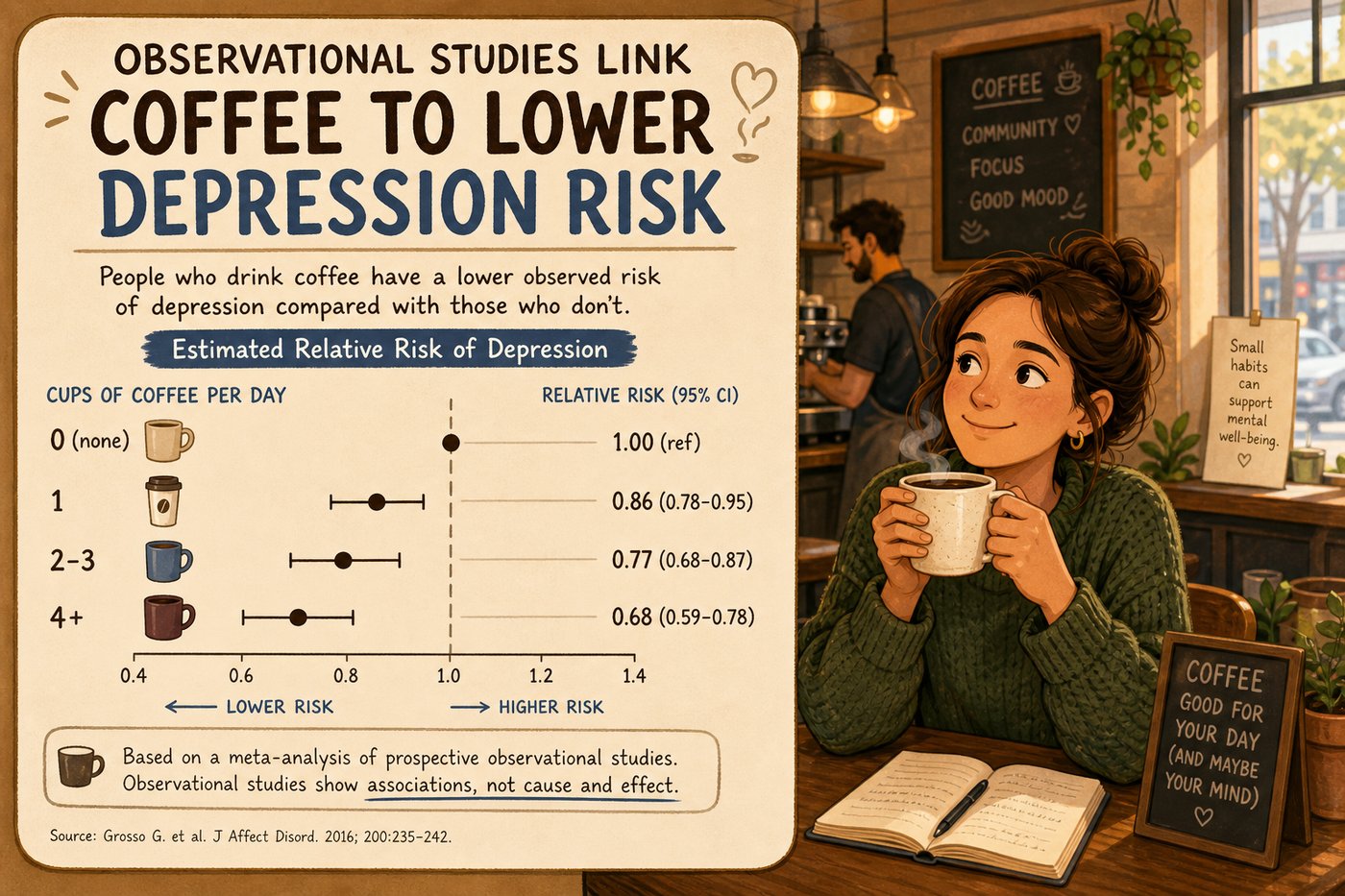
Before you swap your medication for a French press, read the fine print.
These are observational links, not proof that coffee treats depression.
Part of the effect could simply be coffee drinkers feeling normal again after an overnight break, which is symptom relief, not treatment.
And caffeine cuts both ways: a 2024 meta-analysis in Frontiers in Psychology found higher intake, especially above about 400 mg a day, is associated with more anxiety, and caffeine can fragment your sleep on top of that.
We dig into the mood question further in our guide to whether coffee is good for depression. The thing you love is real. The mechanism is just weirder than the marketing, and your brain is a willing partner in the trick.
How to Drink Coffee With Your Eyes Open
None of this means you should quit. It means you can be smarter about the cup you already love. A few practical takeaways fall straight out of the science above.
- Respect the half-life. If caffeine can linger up to twelve hours, an afternoon cup can quietly steal deep sleep. The Sleep Foundation suggests cutting off caffeine at least eight hours before bed.
- Test a delayed first cup. If you crash hard in the afternoon, try waiting an hour or so after waking before coffee. It is harmless to try, even if the ninety minute figure end up being more folklore than proof.
- Use decaf strategically. Since the ritual carries real weight, a decaf in the late afternoon or evening can scratch the coffee itch without wrecking your sleep. Our best tasting decaf coffee picks make that swap easier.
- Watch the second and third cups. Tolerance is real, so chasing the first cup’s high with more caffeine mostly deepens the eventual crash.
- Consider lower caffeine options. If you like the idea of an easier buzz, blends like mushroom coffee often carry less caffeine per cup than standard drip.
The Honest Verdict
So should you still drink it?
I say Yes!
Just drink it with your eyes open.

Caffeine blocks tiredness signals, it is not a vault of free energy.
The ritual matters more than we like to admit.
Withdrawal is part of the bargain.
And none of this makes your morning cup fake.
Conditioning is not irrational. Ritual isn’t a negative.
Your brain learned that this smell, this warmth, this first sip means the day begins, and that association is genuinely real.
The question was never whether coffee works.
It works.
That is simply what happens when your brain is in on the trick.
So drink the cup, enjoy the ritual, and maybe just look at your second and third cups a little differently.
Caffeine Paradox FAQ
Does caffeine give you energy?
Not directly. Caffeine adds no calories or fuel. It blocks adenosine, the molecule that signals tiredness, so you feel more alert. That is best described as borrowed alertness rather than new energy.
How long does caffeine stay in your system?
The average half-life is about five to six hours, but it ranges from roughly two to twelve hours depending on genetics, smoking, pregnancy, and liver function. That is why an afternoon cup can still affect sleep at night.
Why do I crash in the afternoon after coffee?
While caffeine blocks your receptors, adenosine keeps building up. When the caffeine wears off, that backlog floods the receptors at once, which many people feel as the afternoon crash.
Does decaf coffee do anything?
Possibly more than you would think. In a double blind Heliyon study, habitual coffee drinkers showed several of the same responses to decaf as to caffeinated coffee, suggesting the ritual and expectation of coffee play a real role.
Is caffeine withdrawal real?
Yes. It is recognized in the DSM-5. Symptoms like headache, fatigue, and irritability usually begin 12 to 24 hours after your last dose, peak within a day or two, and fade within about a week.
Should I wait 90 minutes for my first coffee?
You can try it, but the evidence is thin. The cortisol awakening response is real, yet no rigorous trial confirms the specific ninety minute delay. If you struggle with afternoon crashes, a short delay is a harmless experiment.
Related Reading on The Coffee Bean Menu
- Best Tasting Decaf Coffee
- Is Coffee Good for Depression?
- What Is Mushroom Coffee? Benefits, Side Effects & Best Picks?
- Coffee Additives
- Colombian Coffee Brands
- Is Matcha Better Than Coffee? Chemistry, Culture & Honest Verdict
What do you notice first when you skip your morning cup, a headache, brain fog, or just the missing ritual? Tell us in the comments.
Editorial note: General information only, not medical advice. Talk to your doctor before making changes if you are pregnant, take medication, or have a heart, anxiety, or sleep condition. Study details reflect published research available as of July 2026.