Is Matcha Better Than Coffee? Chemistry, Culture & Honest Verdict
Is matcha better than coffee?
The answer is not a simple Yes or No.
Matcha often wins on a smoother caffeine curve and a calmer brand story. Coffee still wins on speed, flavor depth, and decades of research.
The real fight is chemistry plus identity, not good versus evil.
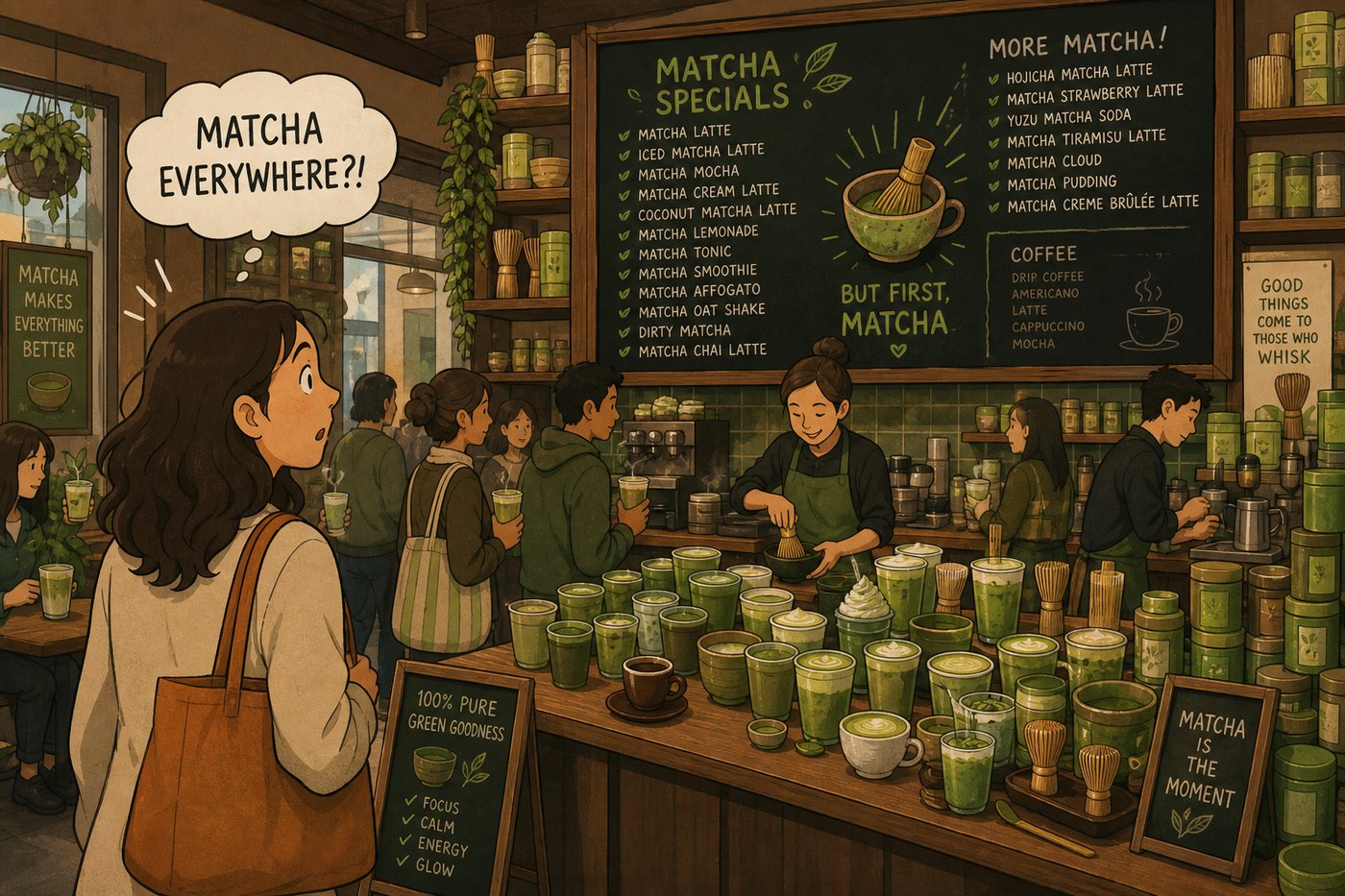
Walk into a major cafe these days and matcha is not the weird order anymore.
It’s on the menu board, in the camera roll, and in half the cups walking out the door at some chains.
We already dug into how caffeine really works in our guide to whether caffeine gives you energy.
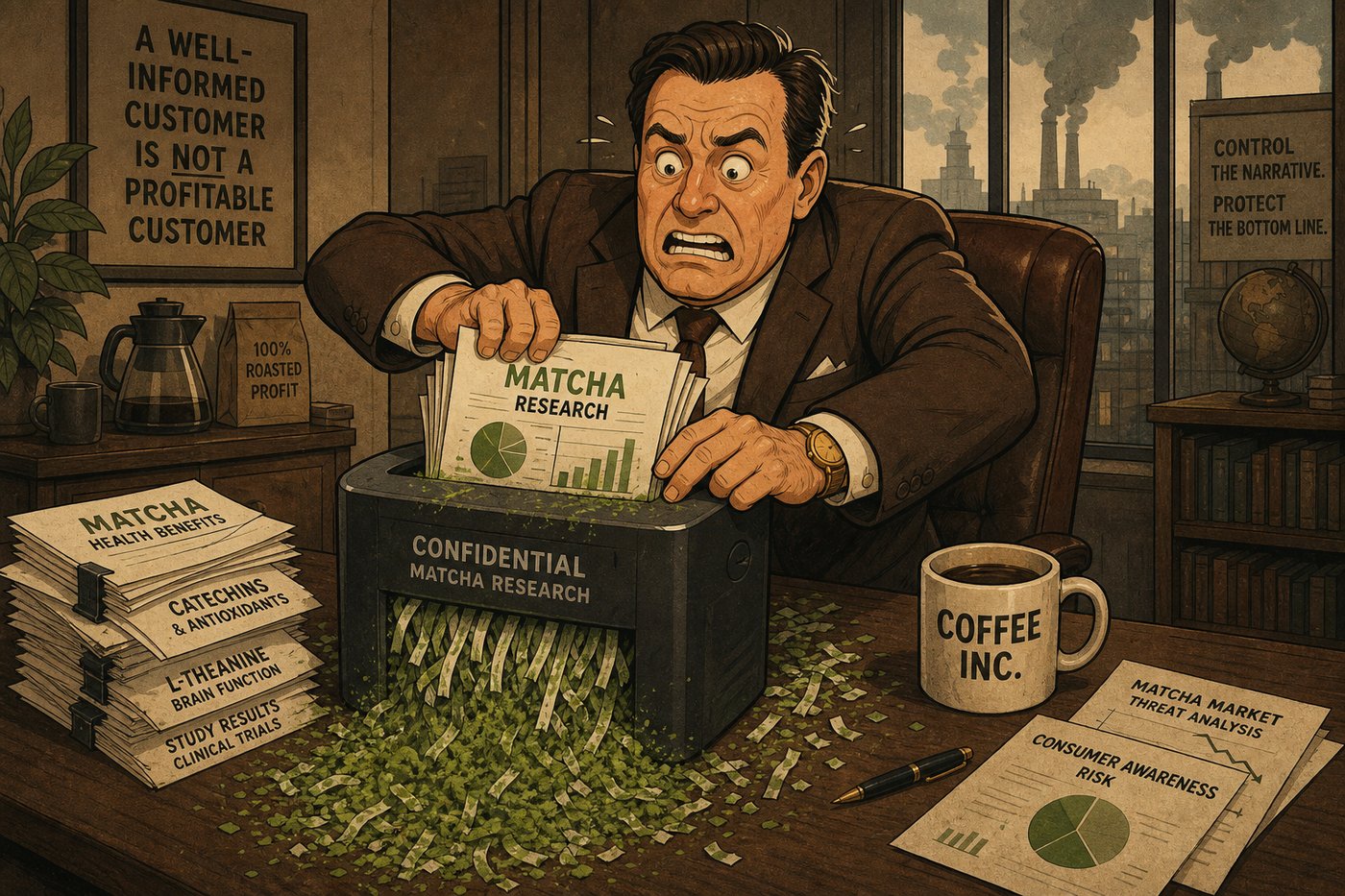
Now we’re going after the green wave, because there’s something about matcha chemistry that the coffee industry would rather you didn’t know.
Keep reading and we’ll unpack the cafe numbers, the L-theanine science, the history of countries flipping drinks, and the honest verdict on whether you should switch.
Watch: Why Is Matcha Beating Coffee?
Prefer to watch instead of read? We turned this whole story into a short Coffee Bean Menu video, from the Blank Street numbers and L-theanine chemistry to coffee’s image problem and the honest verdict.

Is Matcha Better Than Coffee? The Short Answer…
Here is the deal in one breath.
Matcha is not morally superior, and coffee is not obsolete.
Matcha pairs caffeine with L-theanine, which many people feel as steadier alertness with fewer jitters. Coffee still hits harder and faster for most drinkers, and it still owns flavor territory matcha cannot touch.
So if you came here hunting for a winner, grab a seat.
The better question is which cup matches the morning you’re actually living. Some days you need a rocket. Some days you need a green ladder.
We’ll get to that. But first, why did this fight get loud?
Why Matcha Is Suddenly Everywhere
Here’s the thing about this matcha moment. It isn’t one viral drink. It’s a demographic handoff.
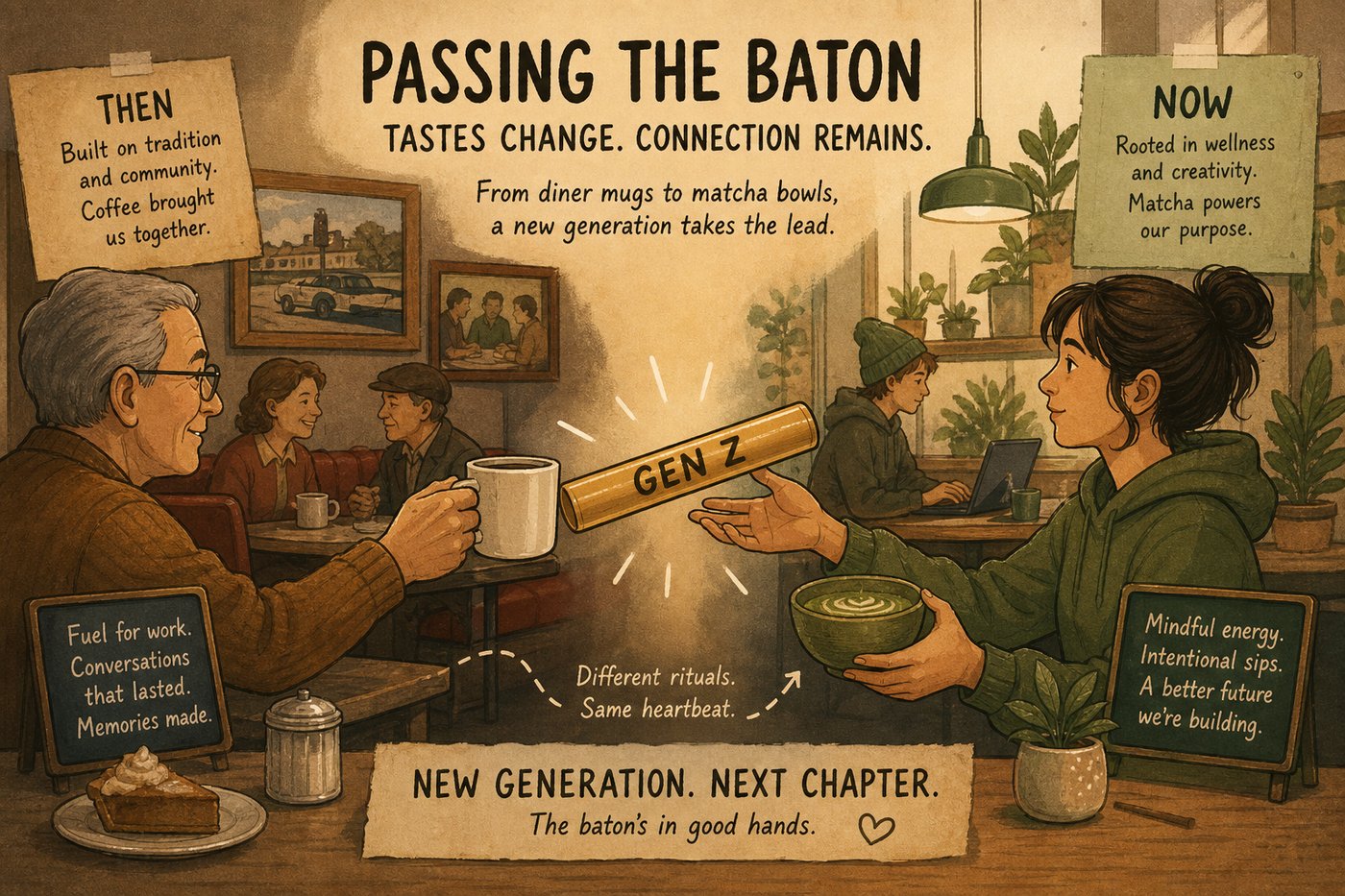
Gen Z didn’t grow up worshipping the classic diner coffee mug. They grew up on TikTok aesthetics, wellness feeds, and a shade of green coffee can’t compete with.
Green reads as calm, clean, and photogenic.
Coffee owns brown, and brown currently reads as burnt, bitter, and the 6 AM grind your parents warned you about.
That’s branding, not botany. And branding is moving wallets.
The numbers aren’t subtle either.
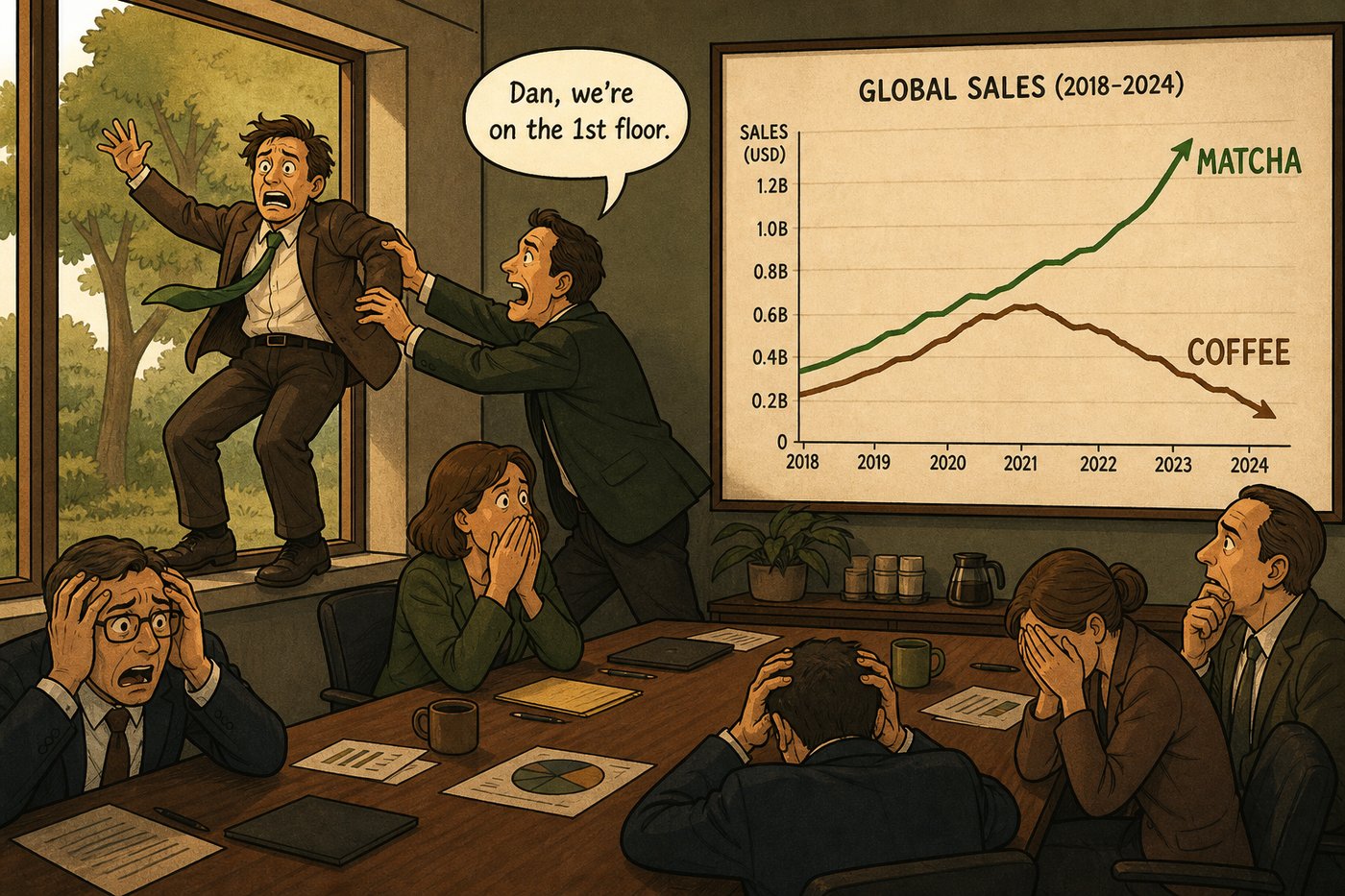
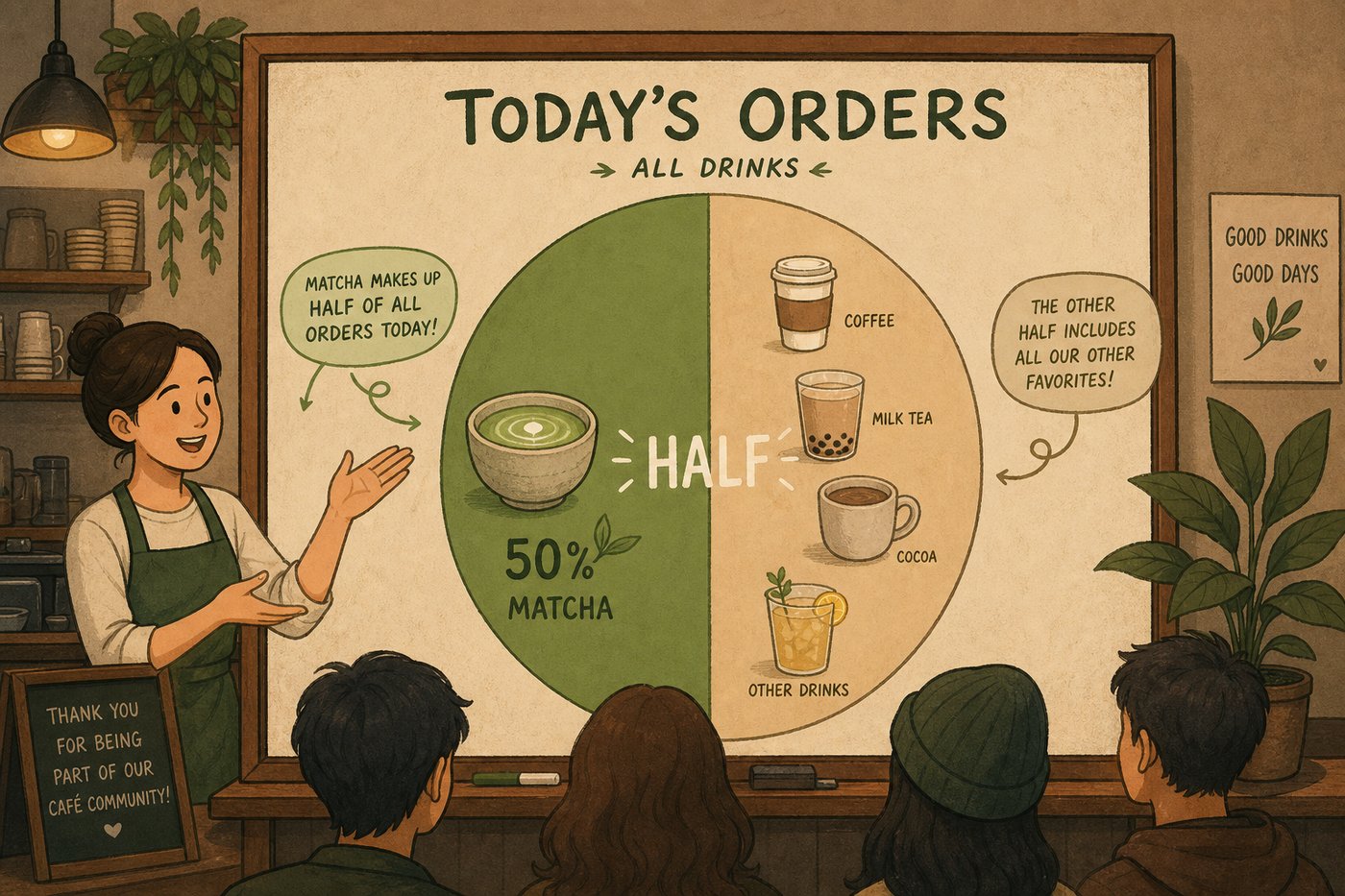
At Blank Street (formerly Blank Street Coffee, the name change should tell you something by itself), matcha now accounts for roughly half of all orders, according to coverage citing World Coffee Portal’s Matcha Report 2026 and follow-ups like The Kitchn.
In some stores during summer, matcha has outsold coffee completely.
That isn’t true everywhere, and it may not last forever. However, it’s still enough to panic an industry that treated espresso like destiny.
Meanwhile, startups selling strawberry matcha, birthday-cake matcha, and lavender-cloud matcha have built valuations that sound like tech IPOs.
That didn’t happen because the leaf is magic. It happened because the drink is brand-friendly.
Operator reports in the 2026 Café Drinks Trend Report even flag matcha menu items growing faster year over year, with chains from Costa to Black Sheep expanding green programs because the margins and the mood board both look good.
The Japanese Connection
Did you know matcha isn’t new?
Japanese tea ceremonies are centuries old.
Monks whisked powdered green tea long before anyone filmed a pour.
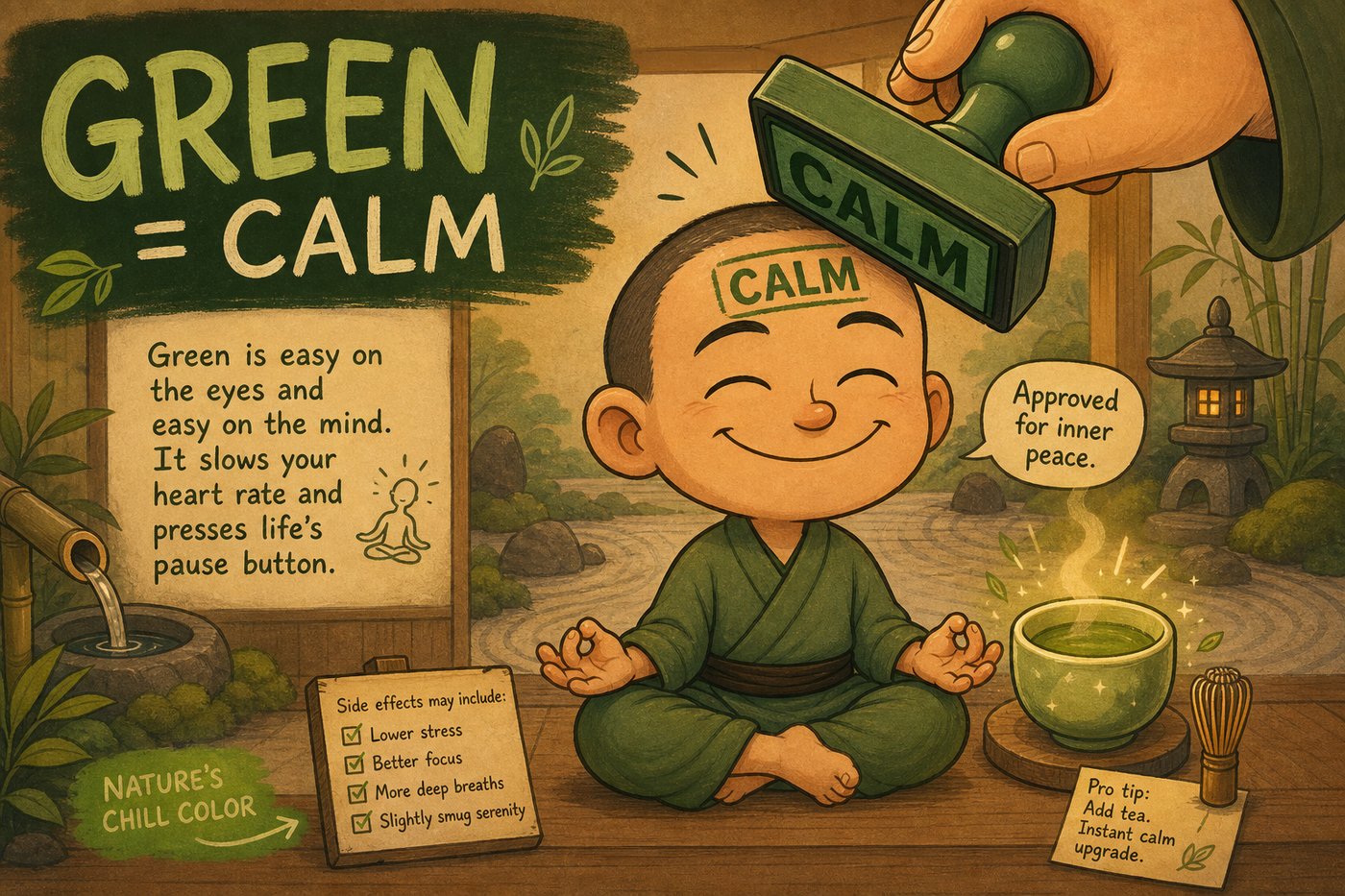
What’s new is matcha as a mainstream youth identity, the same way espresso once meant European sophistication.
Now matcha means intentional living.
And that distinction changes everything about how cafes sell caffeine.
Matcha vs Coffee Chemistry: L-Theanine Changes the Ride
So is matcha actually better fuel?
Partially, and for a boring scientific reason.
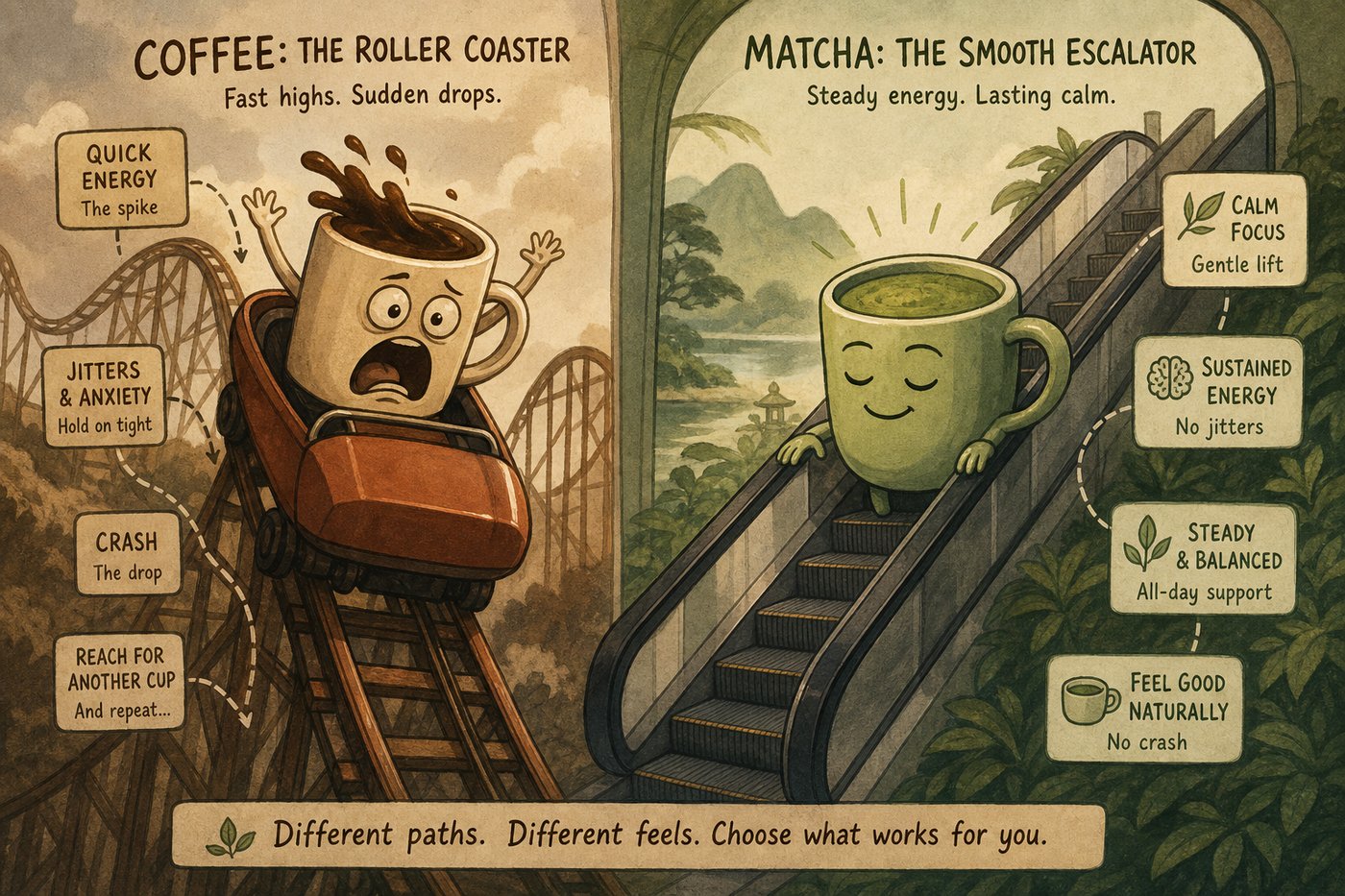
Coffee delivers caffeine fast.
You know the spike: the keyboard-smashing confidence, then the 11 AM betrayal when the lift fades.
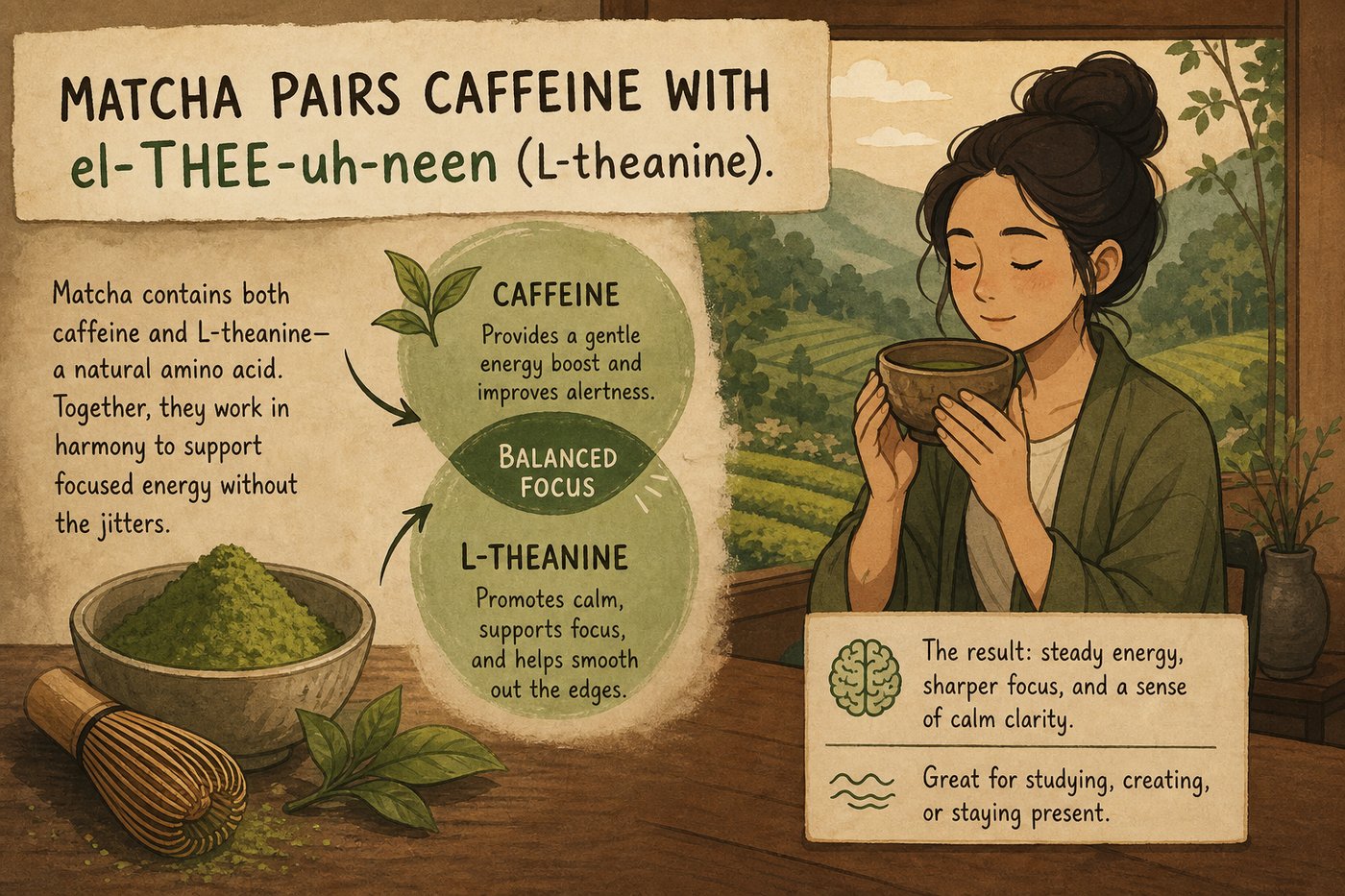
Matcha pairs caffeine with L-theanine, an amino acid from the same leaf.
Studies suggest the combo softens the caffeine edge. You often get a slower rise, fewer jitters, and a steadier alert feeling that lasts longer.
Your brain still gets the molecule.
But the delivery curve is gentler.
Think roller coaster versus escalator. Coffee shoots you up, then gravity does the rest. Matcha tries to keep you steady and gives you a smoother ride down.
Researchers often describe L-theanine as promoting calm alertness. That isn’t sedation, and it isn’t a nap.
It’s more like focus with the volume knob turned down.
A classic randomized crossover trial in Biological Psychology found L-theanine plus caffeine had a different pharmacological profile than caffeine alone.
A later trial in Appetite reported that about 97 mg L-theanine with 40 mg caffeine improved task switching and subjective alertness versus placebo.
A 2025 systematic review and meta-analysis in Nutrition Reviews also found small-to-moderate advantages for theanine plus caffeine on several cognition and mood measures, while still noting uncertainty around effect size.
Side note: you’re still drinking caffeine.
This is not a caffeine-free Zen. It’s caffeine with better public relations.
And for a generation raised on anxiety headlines, that matters. It’s less “my heart is auditioning for a drum solo,” and more “I can focus and still feel like a person.”
If you want the deeper adenosine story behind both drinks, start with our caffeine paradox guide. Coffee blocks adenosine hard and fast. Matcha still blocks it. The ride just feels different.
Matcha vs Coffee Caffeine: Dose Reality Check
People love to say matcha has “less caffeine,” and that is often true per serving, but the range is messy.
A typical 8 oz brewed coffee often lands near the mid-90s of milligrams of caffeine, with a wide swing by brew method, and the FDA still cites about 400 mg a day as a general adult ceiling.
Matcha powder itself can carry roughly 18.9 to 44.4 mg of caffeine per gram, according to a 2020 Molecules review by Kochman and colleagues. A 1 to 2 gram whisked serving commonly lands somewhere in the tens of milligrams, while heavier latte scoops climb higher.
For a plain-language side-by-side on energy feel, Verywell Health’s matcha vs coffee guide lands in a similar place:
- Coffee hits faster
- Matcha often feels steadier
| Drink | Typical caffeine feel | Standout compound | Best for |
|---|---|---|---|
| Brewed coffee | Faster spike, stronger lift | Caffeine (+ chlorogenic acids) | Speed, depth of roast flavor |
| Matcha | Gentler curve for many people | Caffeine + L-theanine (+ EGCG) | Calm focus, lower jitter risk |
Honest limit: “gentler” isn’t universal.
If you scoop a giant ceremonial mountain into oat milk and chase it with a second bowl, you can still overdo it. The dose matters.
Countries Have Flipped Drinks Before
Quick history check: tea and coffee fought this battle before.
Britain used to be a coffee nation. Then tea won, largely for trade and tax reasons tied to the East India Company’s monopoly, as historians and museums like the Boston Tea Party Ships & Museum and surveys of British tea culture on Wikipedia’s tea-in-the-UK overview document.
The American colonies used to be a tea nation. Then coffee won, as a protest after the tea taxes and the Boston Tea Party made coffee feel patriotic.
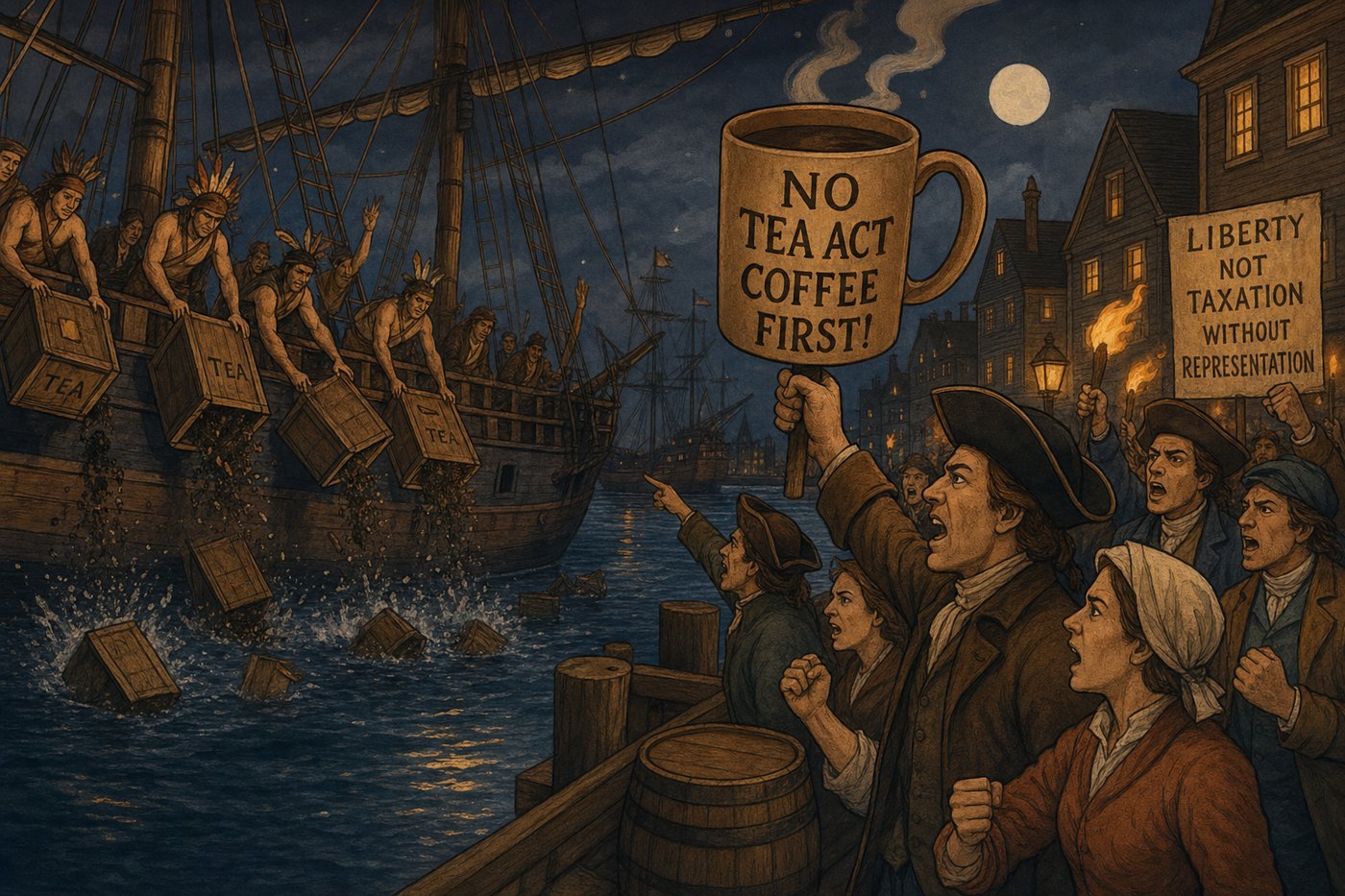
Twice, whole countries flipped their drink of choice.
The chemistry didn’t pick the winner. The culture did.
That’s the same pattern showing up in today’s mood beverage wars.
Palates matter.
Mood boards matter more when a generation wants a new identity costume for the same molecule.
Ritual Redesign: Commute Cup vs Camera Roll
But chemistry doesn’t explain birthday-cake matcha. The bigger engine is ritual redesign.
Coffee’s ritual is speed: Grab, Guzzle, Commute, Done.
Matcha’s ritual is performance: Whisk, Foam, Hold the cup to the light, Film the pour.
The drink is half beverage, half content.
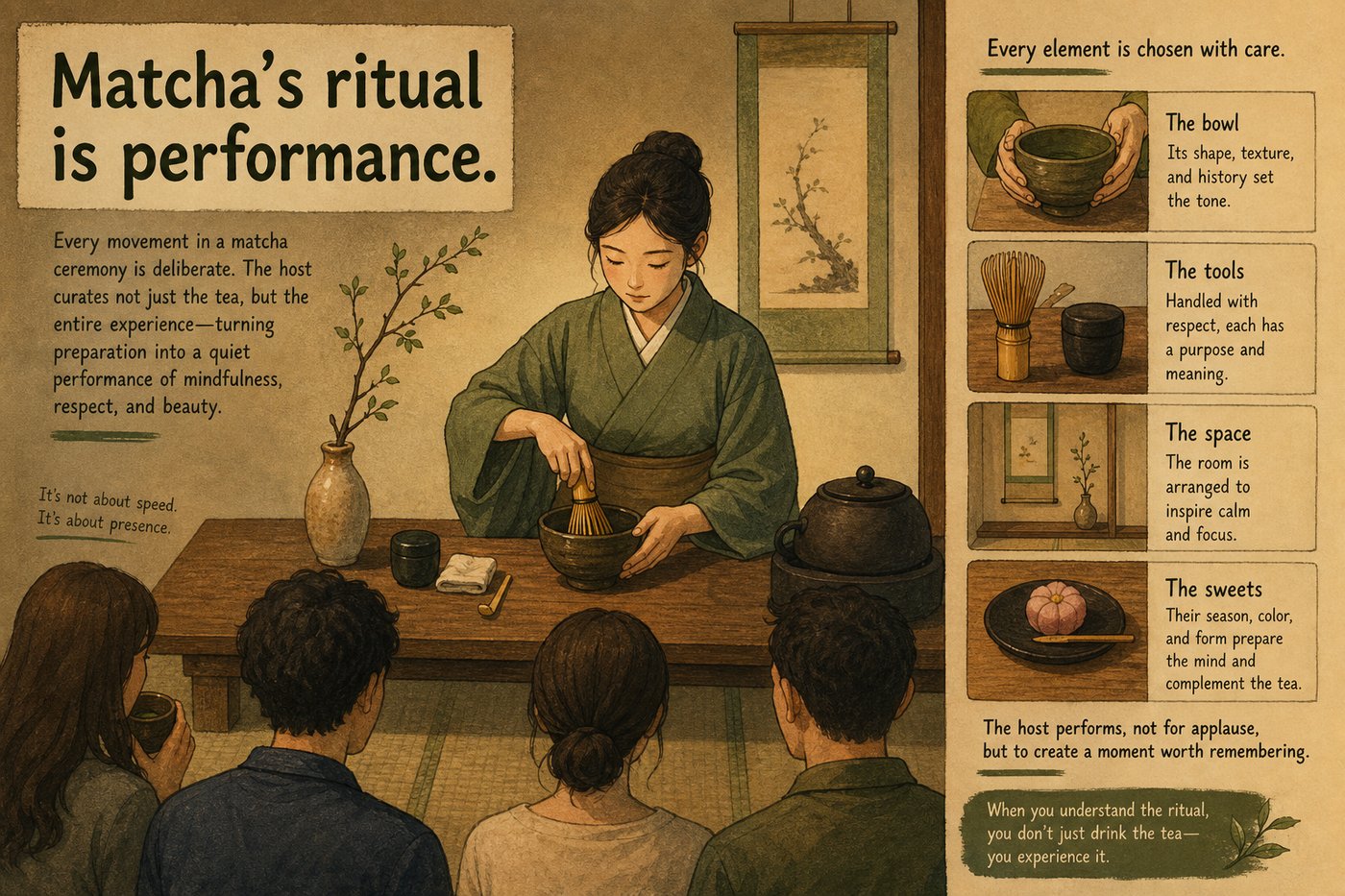
That sounds shallow at first. However, ritual tells a different story.
Your brain responds to cues: the color, the preparation, the vibe.
Matcha learned what coffee forgot. People don’t just buy caffeine. They buy the story around the cup.
And green tells a story brown can’t right now: Calm focus, Soft ambition, Main-character energy without the burnout montage.
Coffee optimized for the commute.
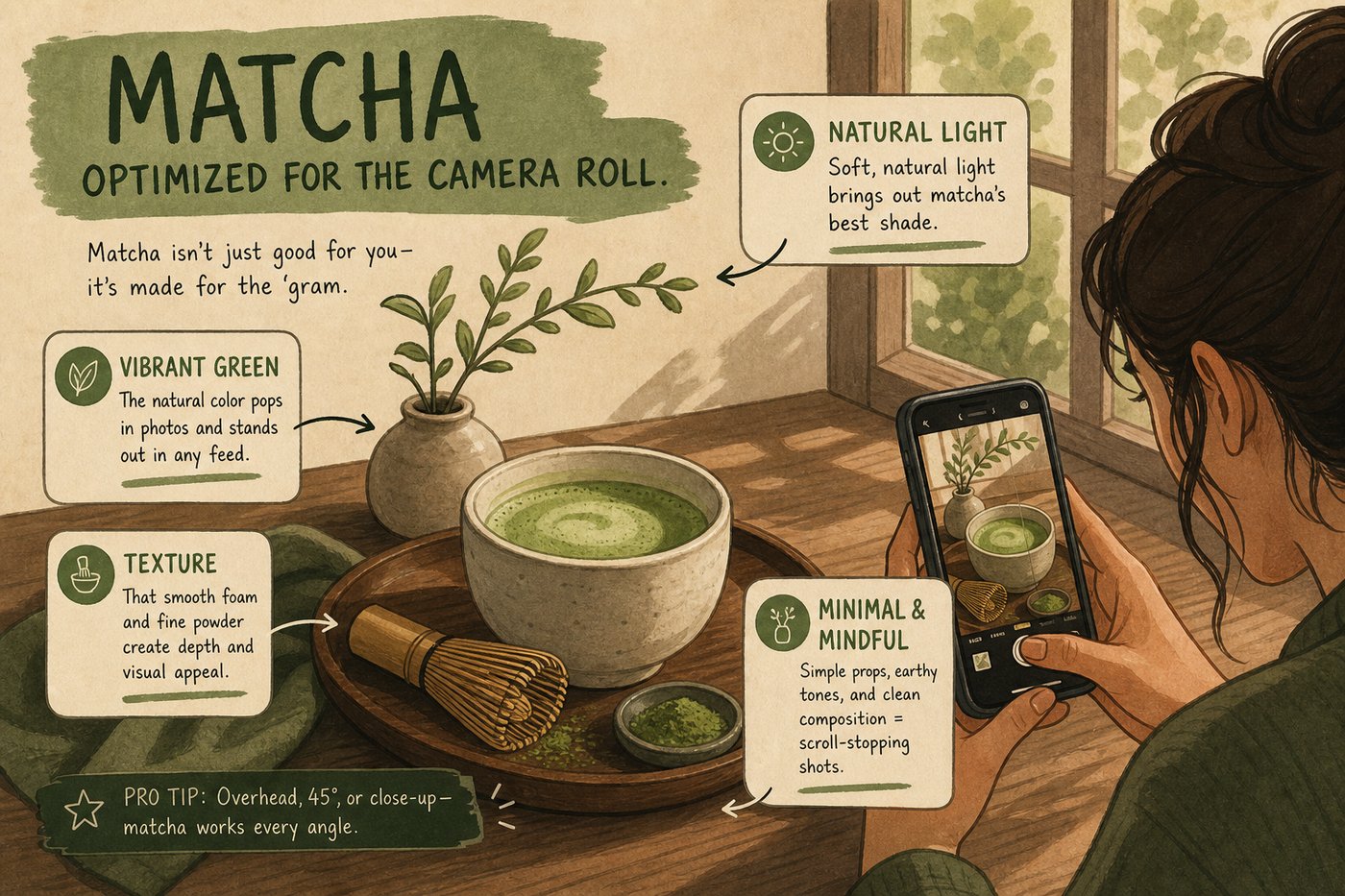
Matcha optimized for the camera roll.
Iced coffee tries to help coffee fight back on aesthetics. Unfortunately for coffee, brown liquid in a plastic cup still loses to neon green during the golden hour. Matcha is native to the social feed.
If you care about what goes into the cup beyond the leaf or the bean, our roundup of coffee additives is a useful adjacent read.
What does this all mean?
Ritual is powerful.
Does that make matcha or coffee the winner?
Coffee’s Real Problem Is Image, Not Taste
So is coffee losing on taste?
Honestly? No.
Most adults still prefer the flavor profile they grew up with. The problem is image.
Coffee spent decades selling hustle culture.
The slogans were everywhere: no sleep until the deal closed, “espresso yourself,” and the classic “don’t talk to me before my first cup” merch.
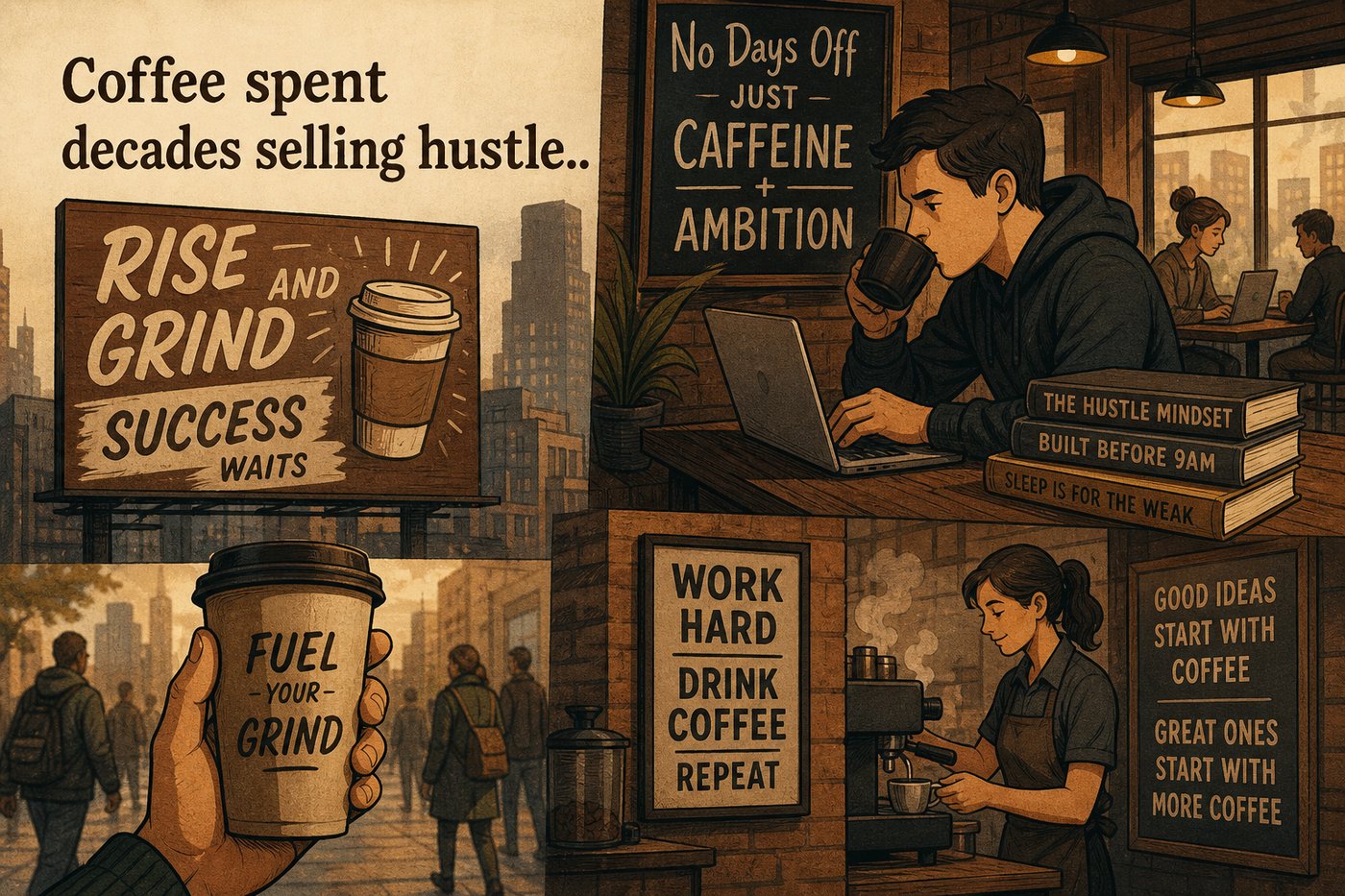
That marketing felt funny to a lot of millennials. To Gen Z, much of it reads like cringe armor. They watched older coworkers brag about burnout, then picked a drink that doesn’t cosplay suffering.
Coffee’s reputation became jittery, acidic, aggressive, and vintage. Matcha’s reputation became gentle, photogenic, intentional, and fresh. Same caffeine category. Different emotional costume.
Here’s a little-known detail: plenty of coffee companies are panic-launching matcha menus. Not because they hate espresso. Because they read the mood board.
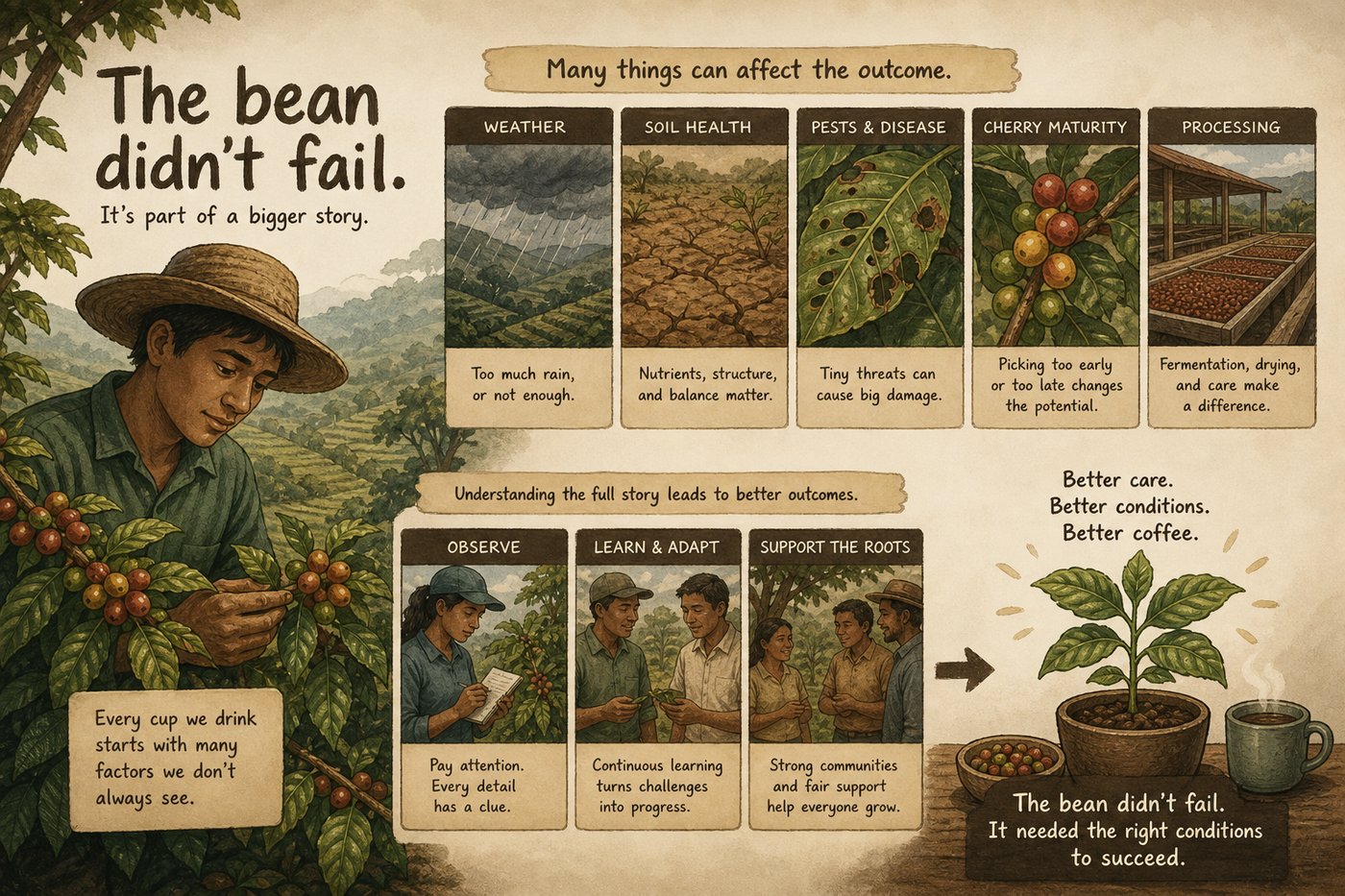
The bean didn’t fail. The branding did.
Coffee tried to wellness-wash itself with mushroom lattes, adaptogen cold brew, and collagen cortados.
Some of that is real science.
A lot of it is reputation repair.
Matcha walked in already wearing the wellness costume. No explanation required.
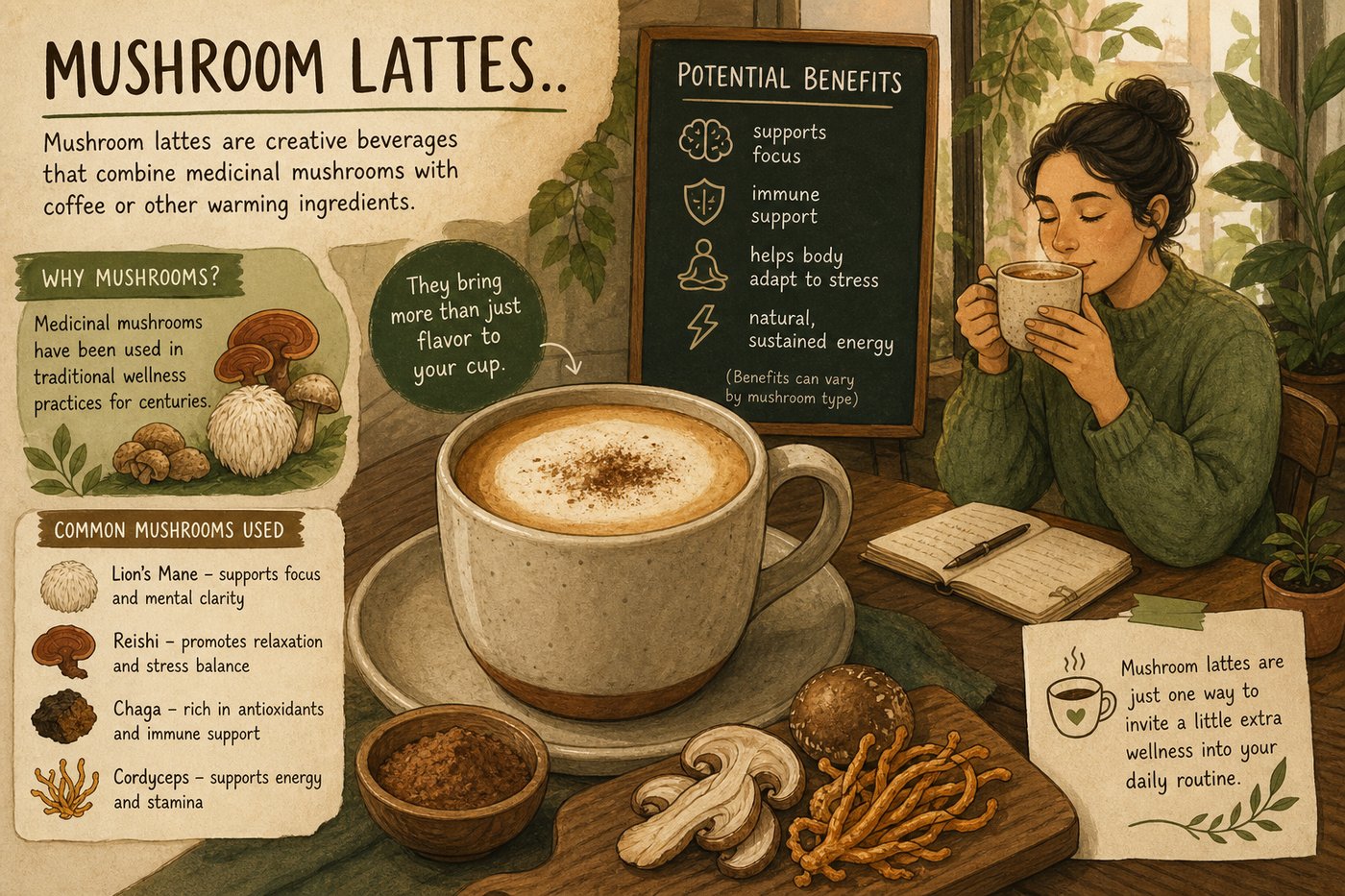
Curious about the mushroom side of that repair job? Our guide to what mushroom coffee actually is separates the history from the marketing claims. Some of those cups earn a look. Some are just greenwashing in brown.
The Mood Beverage Wars
So what should we call this?
Let’s go with The Mood Beverage Wars.
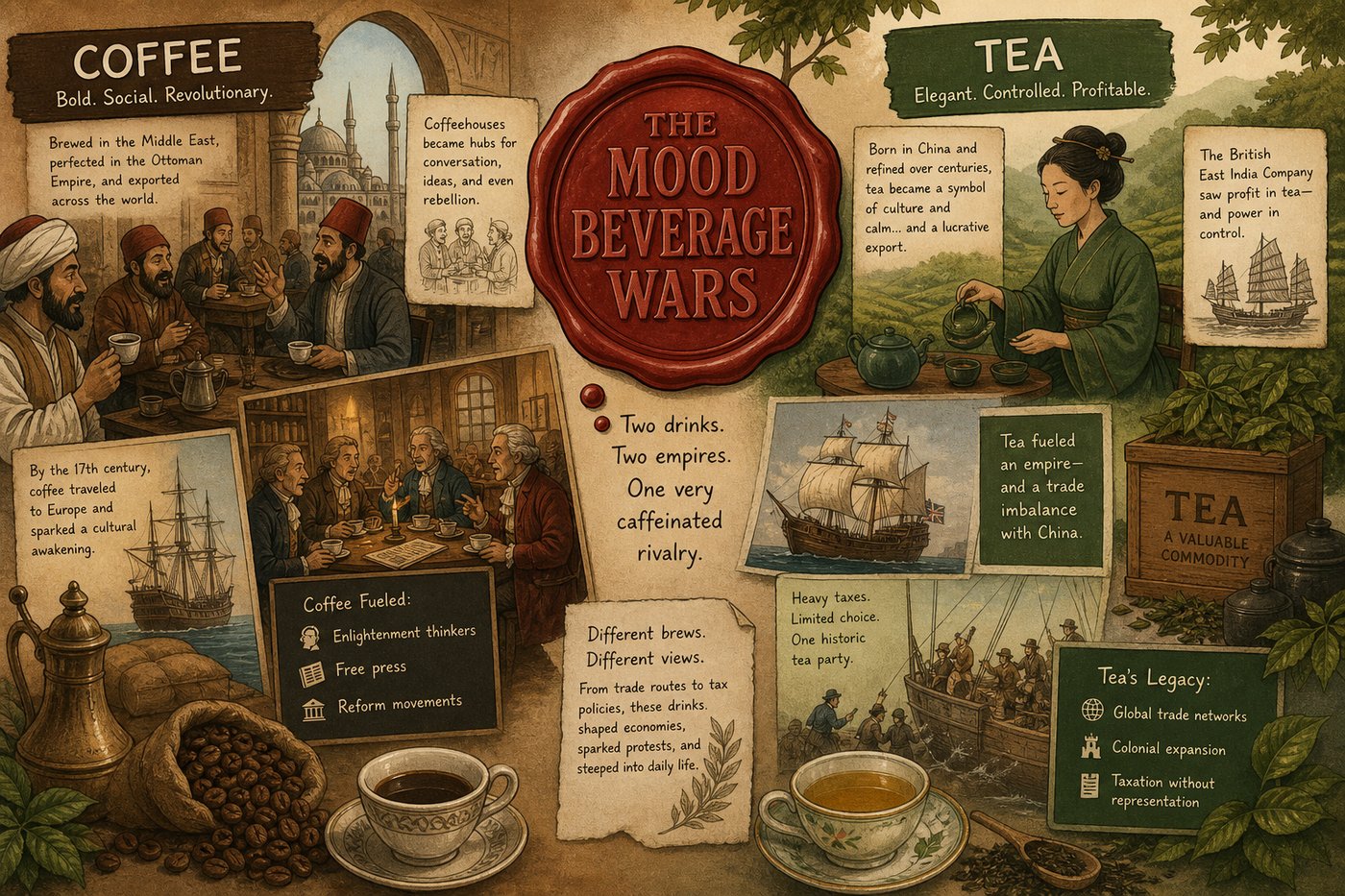
Team Coffee versus Team Matcha isn’t really a flavor fight. It’s about which drink matches the century you’re living in.
The industrial century wanted fuel. Factory whistles. Punch the clock. Coffee was perfect for that world.
The attention-economy century wants optics. Feeds. Identity markers. A drink you can be seen holding. Matcha is perfect for that script.
That doesn’t make coffee obsolete. It makes coffee poorly marketed to the newest wallet.
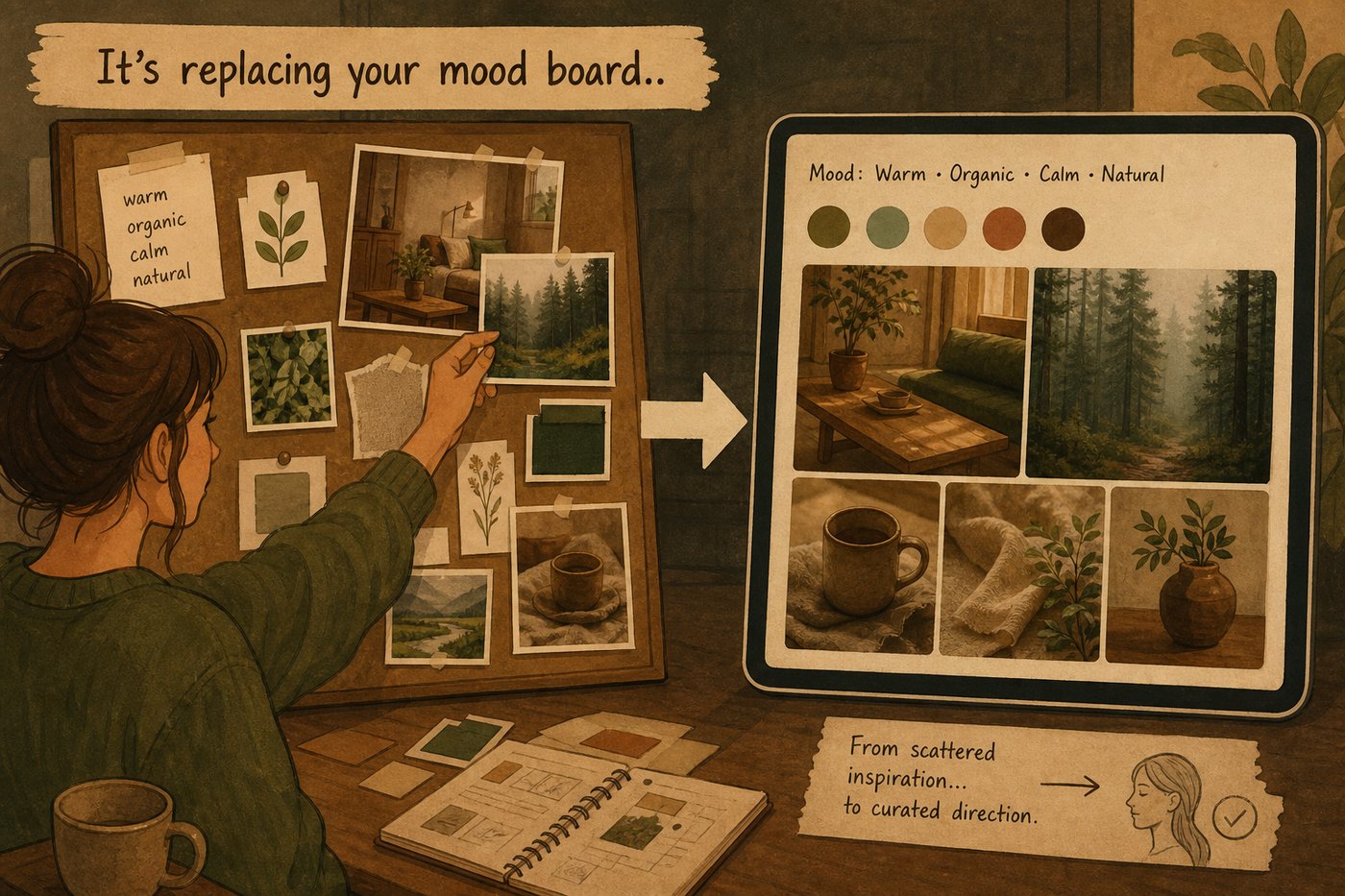
The twist most coffee lovers miss is this: matcha isn’t replacing your palate. It’s replacing your mood board. And mood changes faster than agriculture.
Coffee can adapt. It always has.
Cold brew was a vibe pivot.
Oat milk was a vibe pivot.
The third wave made baristas into craftspeople.
The next pivot might be admitting the hustle era is over, or at least selling something softer alongside the dark roast.
Flavor still matters. Origins still matter. That’s why we keep building guides like our Colombian coffee brands roundup. The coffee bean story isn’t dead. It just needs a costume that doesn’t scream “grind culture.”
The Honest Verdict: Should You Switch?
So should you switch?
Our verdict: neither one wins.
But only one of them knows what decade it is.
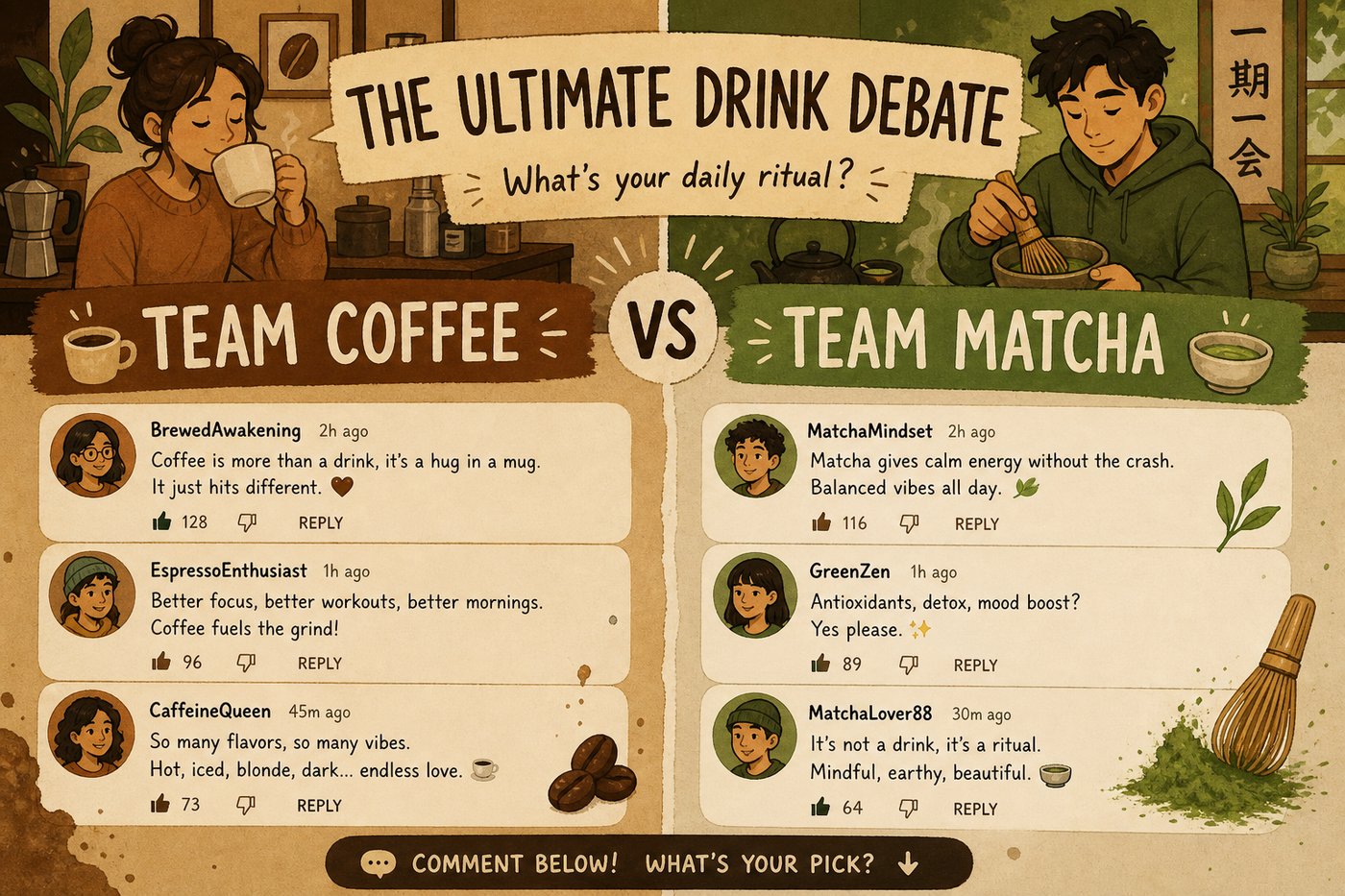
Matcha counters with a smoother caffeine curve and a calmer brand costume. Coffee still wins on speed, flavor depth, and history.
Neither drink is fake. Neither is morally superior.
You’re choosing chemistry plus identity, not good versus evil, and not brown versus green as a moral scoreboard.
The question isn’t which team wins. It’s which cup matches the life you’re actually living.
Some mornings you need a rocket. Some afternoons you need a green ladder.
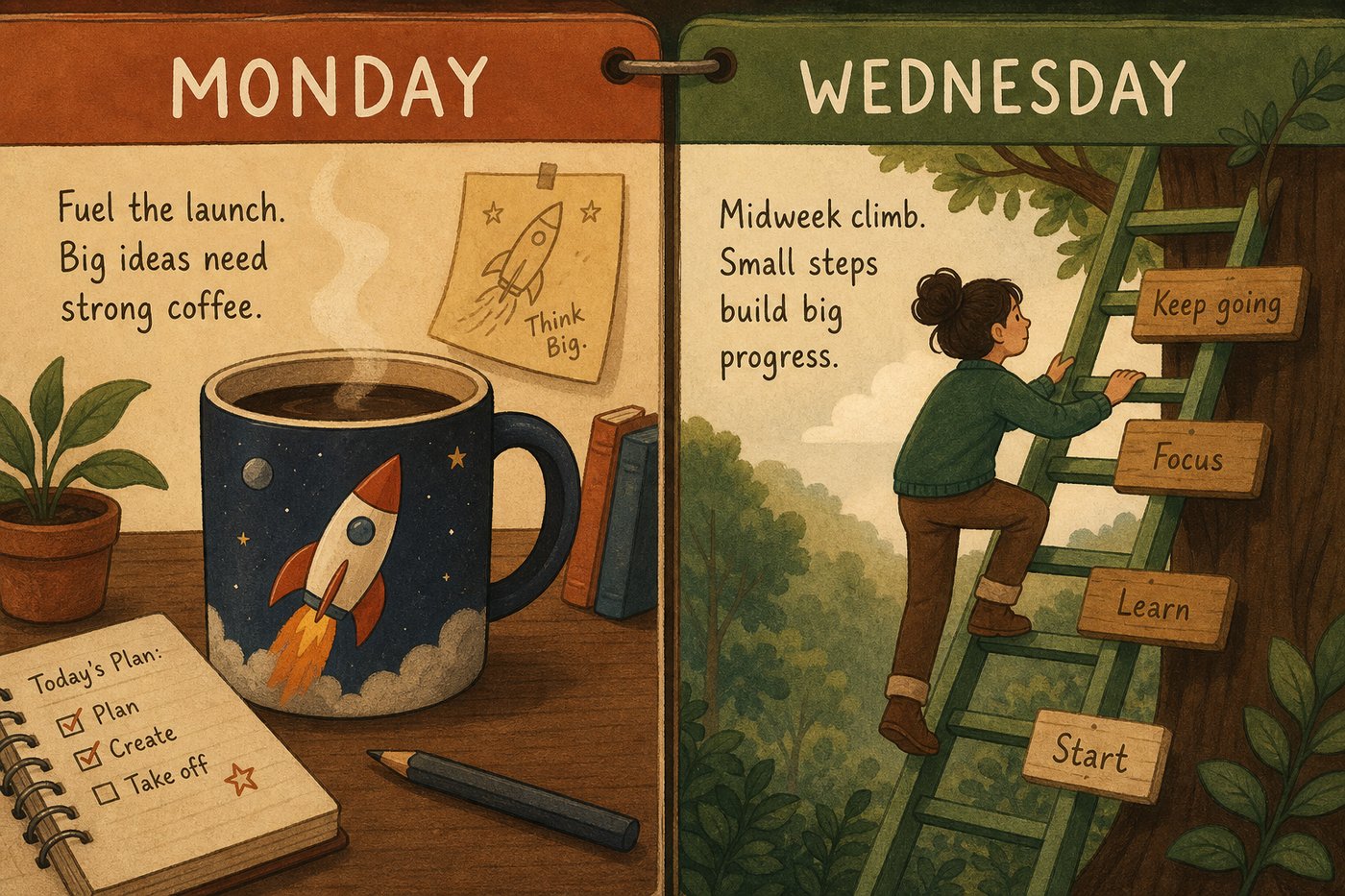
What are you?
Team Coffee or Team Matcha?
Both cups are still caffeine in costume. Pick the costume that fits the day, and maybe keep the other one for later.
That isn’t fence-sitting.
That’s reading the room.
Matcha vs Coffee FAQ
Is matcha better than coffee?
It depends on what “better” means. Matcha often feels steadier because of L-theanine with caffeine. Coffee usually hits harder and faster, and it still wins for many people on taste. Neither is universally better.
Does matcha have less caffeine than coffee?
Often, yes, per typical serving. An 8 oz coffee commonly sits near the mid-90s of milligrams of caffeine, while a standard 1 to 2 gram matcha serving is often lower. Heavy matcha scoops can close the gap. Check your dose.
Why does matcha feel calmer?
Matcha contains L-theanine, an amino acid studied for calm alertness when paired with caffeine. It doesn’t erase caffeine. It can change how the stimulation feels for many drinkers.
Is matcha healthier than coffee?
Not automatically. Matcha brings catechins like EGCG and L-theanine. Coffee has a larger long-term research base linking moderate intake to several favorable outcomes. “Healthier” depends on your sleep, anxiety, stomach, and how you sweeten the drink. Reviews such as The Conversation and practical comparisons from Healthline and GQ land in a similar place: different profiles, not a crown.
Why is matcha so popular with Gen Z?
Identity and ritual matter as much as chemistry. Green photographs well, feels intentional, and rejects hustle-culture coffee merch. Cafe data from chains like Blank Street shows the trend is commercial, not just social media cosplay.
Should I replace coffee with matcha completely?
Only if you want to. Plenty of people keep coffee for mornings and matcha for afternoons. If coffee wrecks your sleep or jitters, a matcha trial is cheap. If you love coffee and feel fine, you don’t owe the algorithm a switch.
Related Reading on The Coffee Bean Menu
- Why Coffee Wakes You Up (It Has Nothing to Do With Energy)
- What Is Mushroom Coffee?
- Coffee Additives
- Is Coffee Good for Depression?
- Best Tasting Decaf Coffee
- Colombian Coffee Brands
Team Coffee or Team Matcha for your next cup? Tell us in the comments, and defend it like your morning depends on it.
Editorial note: General information only, not medical advice. Talk to your doctor before changing caffeine habits if you are pregnant, take medication, or have a heart, anxiety, or sleep condition. Cafe statistics and study details reflect sources available as of July 2026.